This month a selection of layouts from our club house and a garden railway.
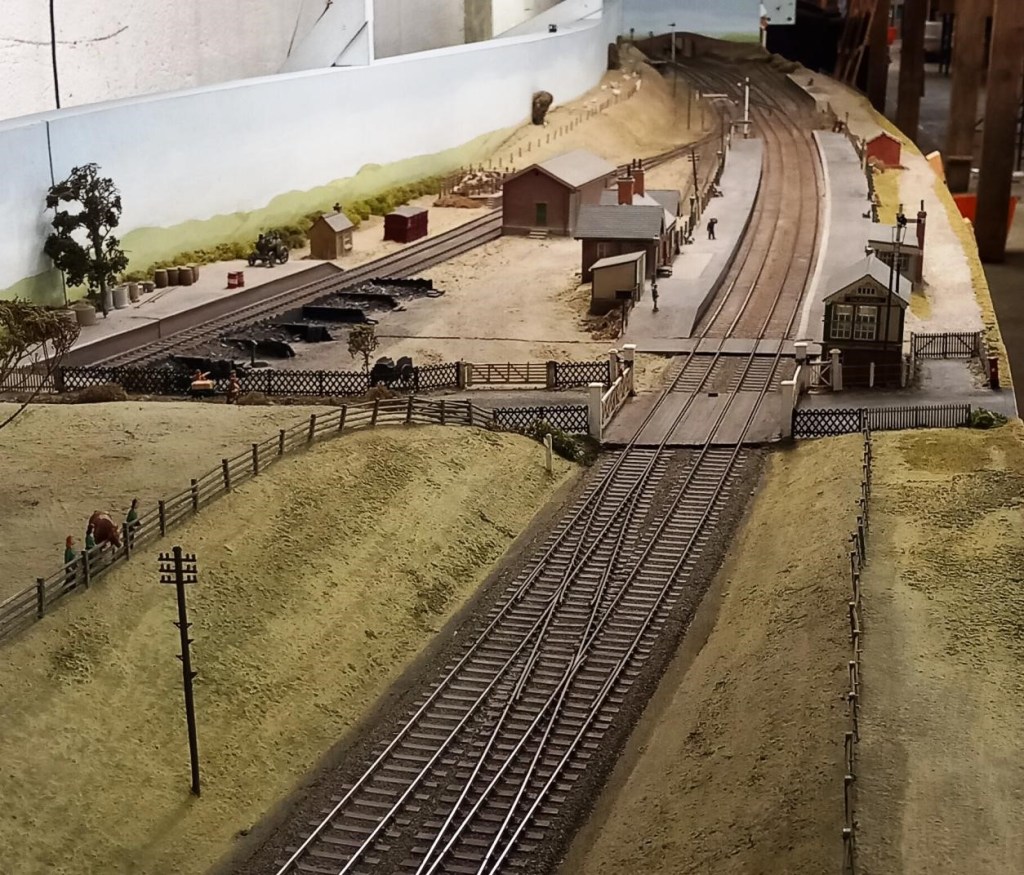
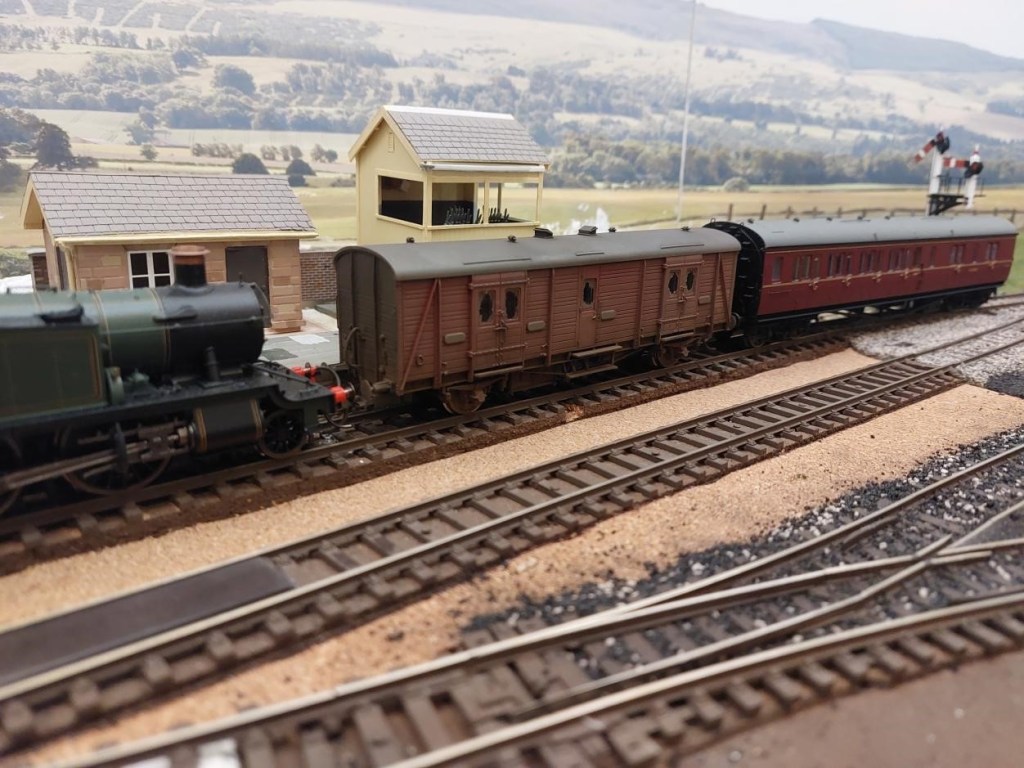
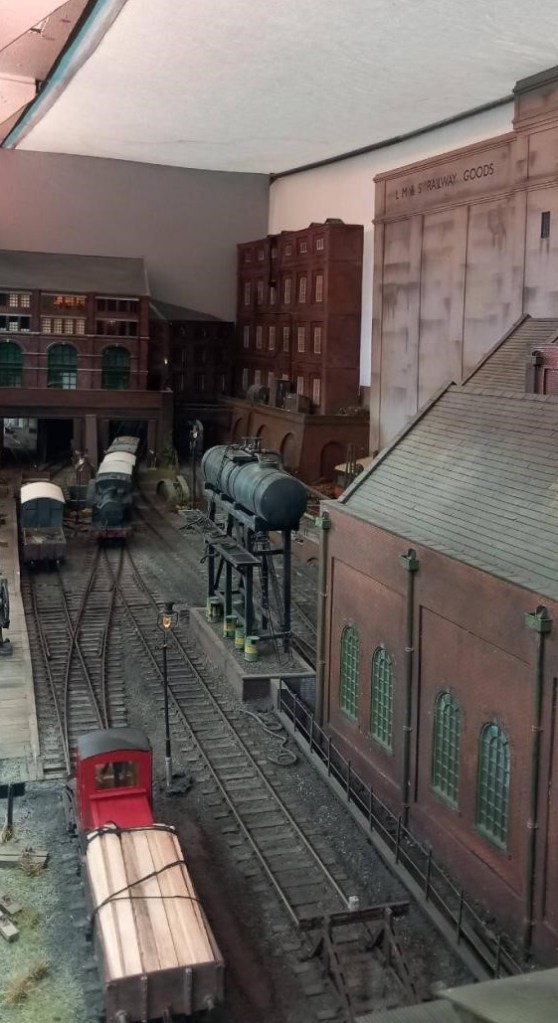
Ray Hammond’s layout Thursford (M&GN) as set up in the club room. This is a pioneering layout built to S4 rather than P4 standards – so absolutely no compromise on check rail clearance and back to back. This layout is in the capable hands (and care) of Ray’s daughter Susan.
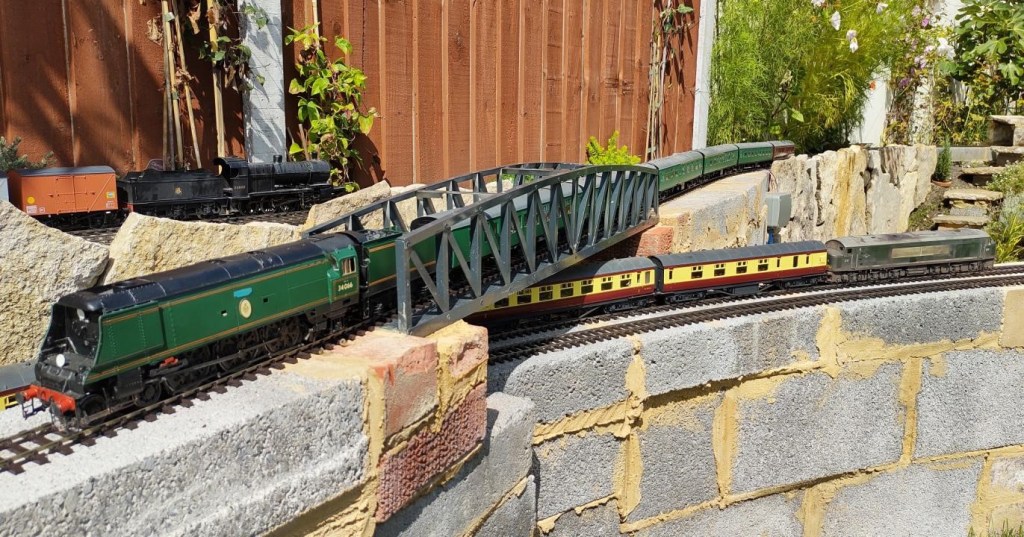
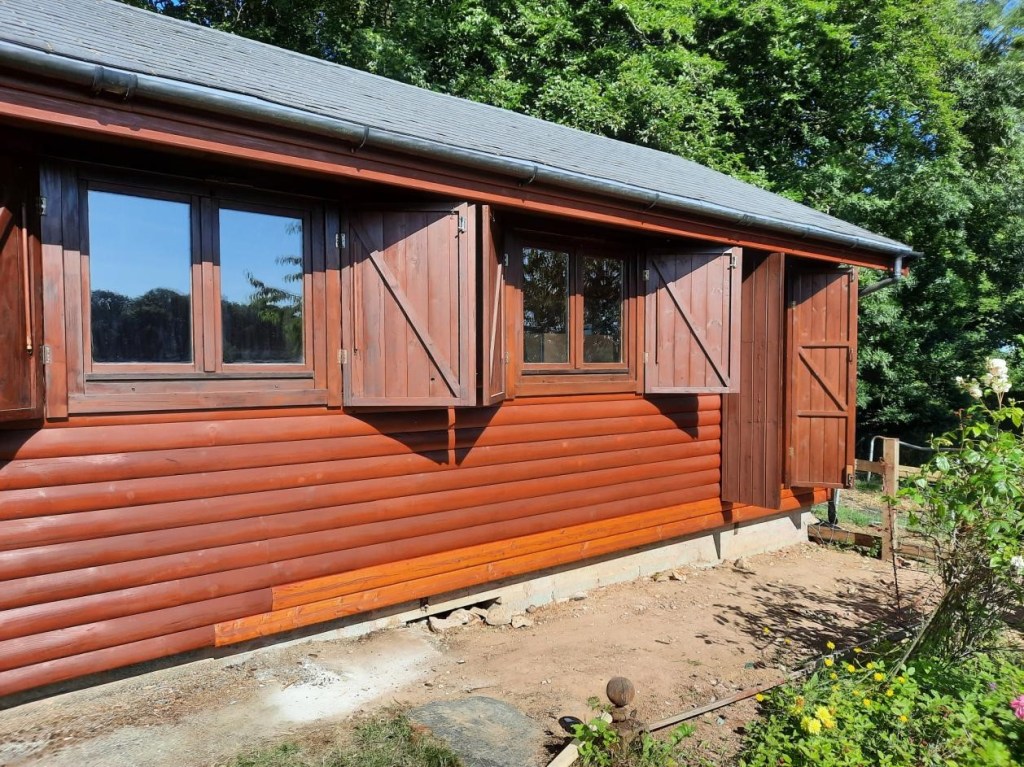
Dick has been thinking about building a garden railway since he bought his first house in 1978. There were two aborted projects at different houses, but now he has retired, he decided to get on with building an O gauge railway. He has built a 36 ft. long shed, (insulated, heated and fully plumbed), that will house a terminus station based on Bournemouth West. From there the line runs out into the garden, around a pond and returns to the shed at a lower level where there are storage roads. The track continues out of the other end of the shed around another pond and then returns the way it came to eventually arrive back at Bournemouth West. There is a link line outside that allows for continuous running. The total length of run is around 4 scale miles. At the moment the station is just track on boards and outside is bare track on concrete block walls. He is running DC control at the moment but intends to move to DCC. Running outside commenced from the beginning of August.
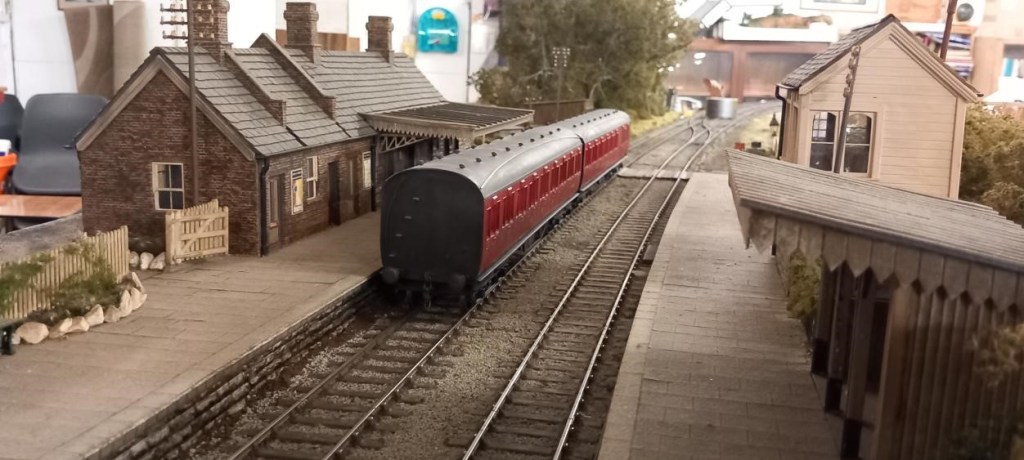
Evercreech New station with buildings by Allan Downes (7mm 0 Gauge). A dedicated team is now working on cladding Pecking Mill Viaduct which will be quite a feature on the layout.
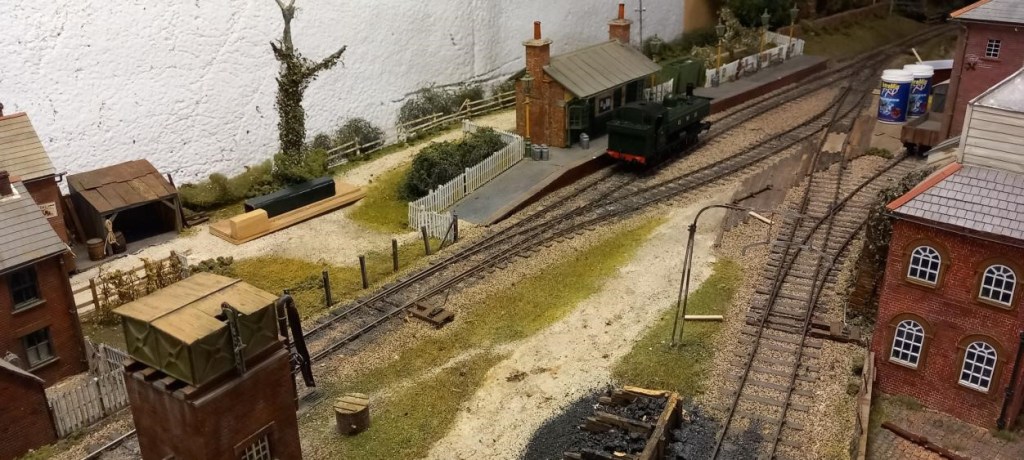
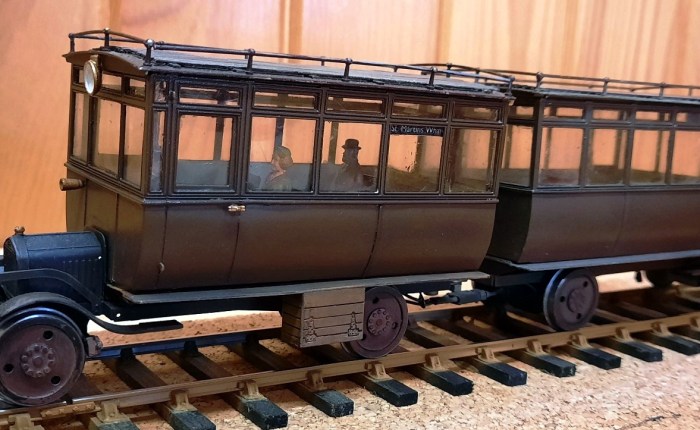
St Martin’s Wharf (7mm 0 Gauge), Donated to the club by Sheila Alderman and being readied for a return to the exhibition circuit.
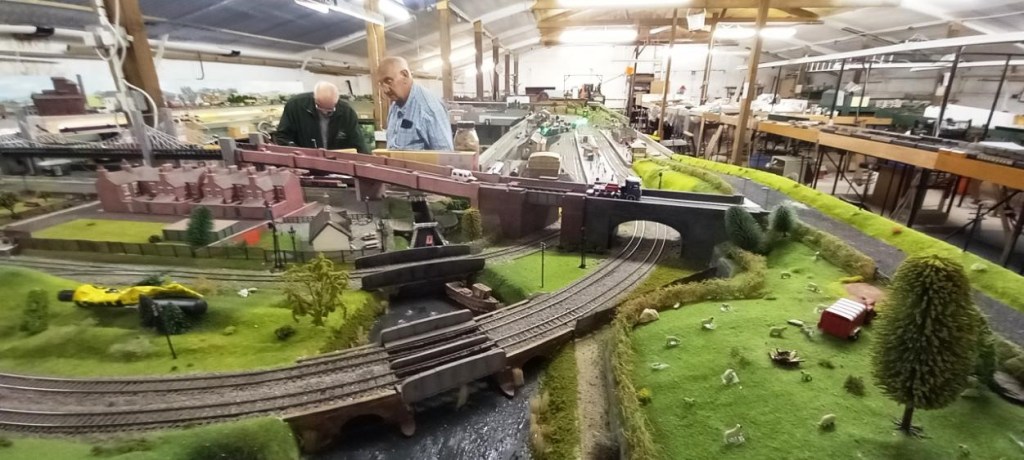
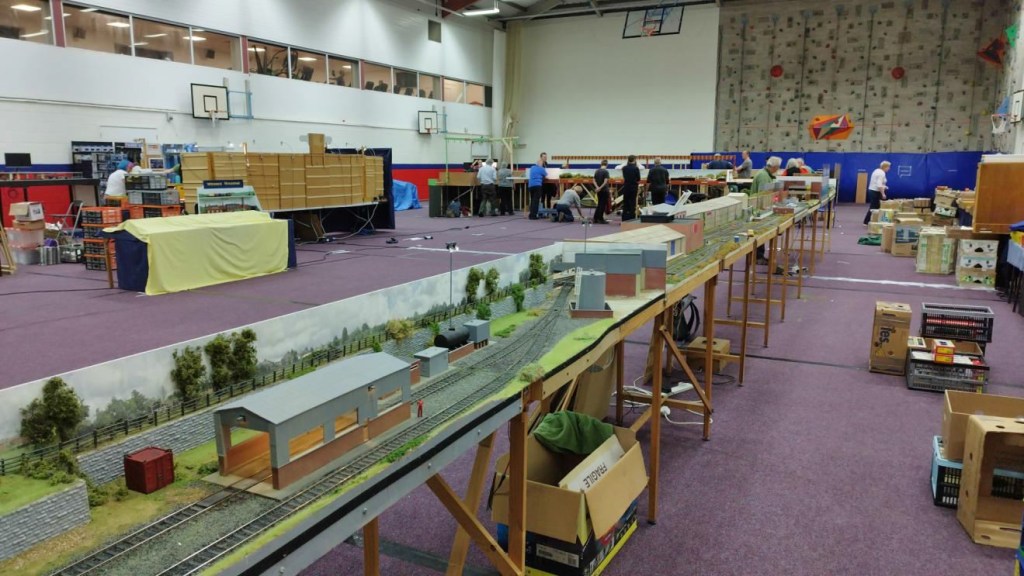
A view inside our spacious clubroom, Holly Junction (4mm 00 Gauge) foreground and South Junction fiddle yard right (4mm EM Gauge).
Summer is finally here and there is still some modelling being shared.
Dom’s Photo plank is finished and looks superb.
Having trialled the recently cut field look on the plank, Dom has started the landscaping of the area in front of the headshunt on Coombe Town. The idea is to use a similar field look and an open fence to give an open country feel, whilst not blocking the view of the trains much further.
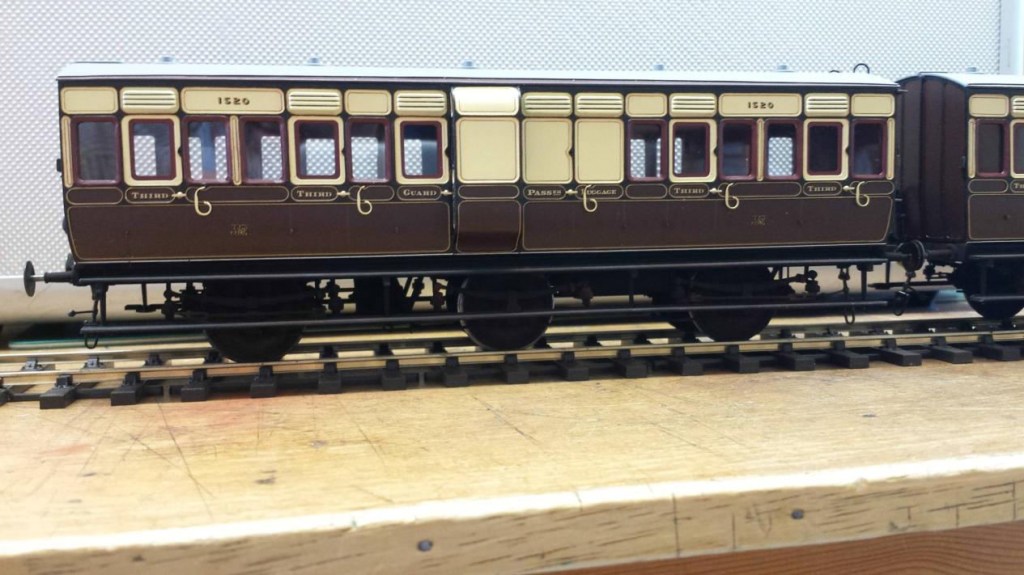
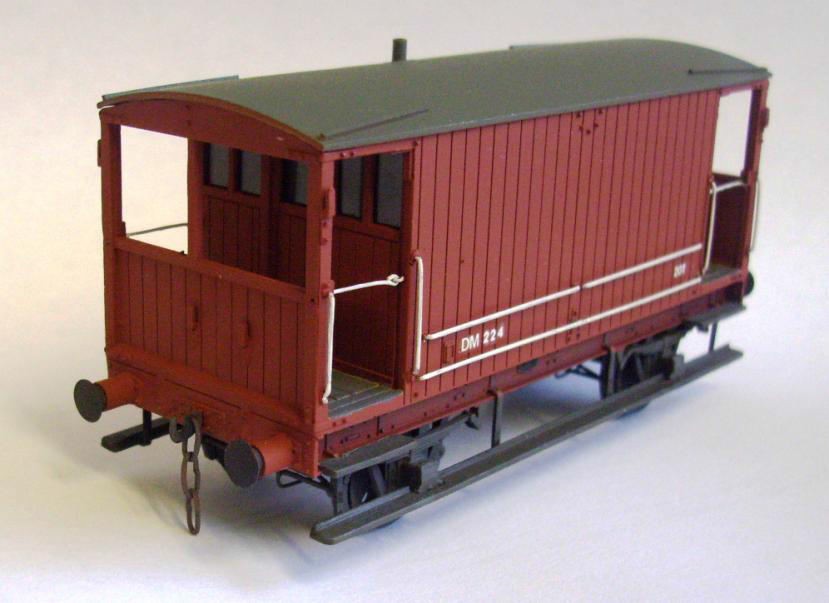
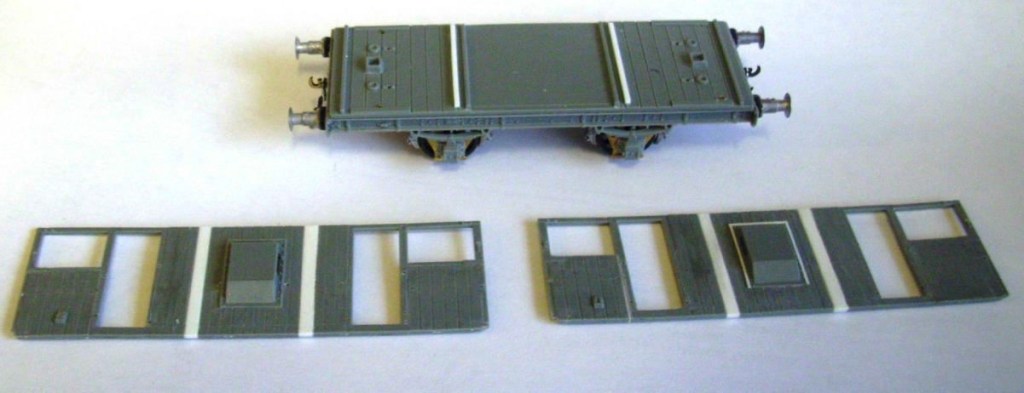
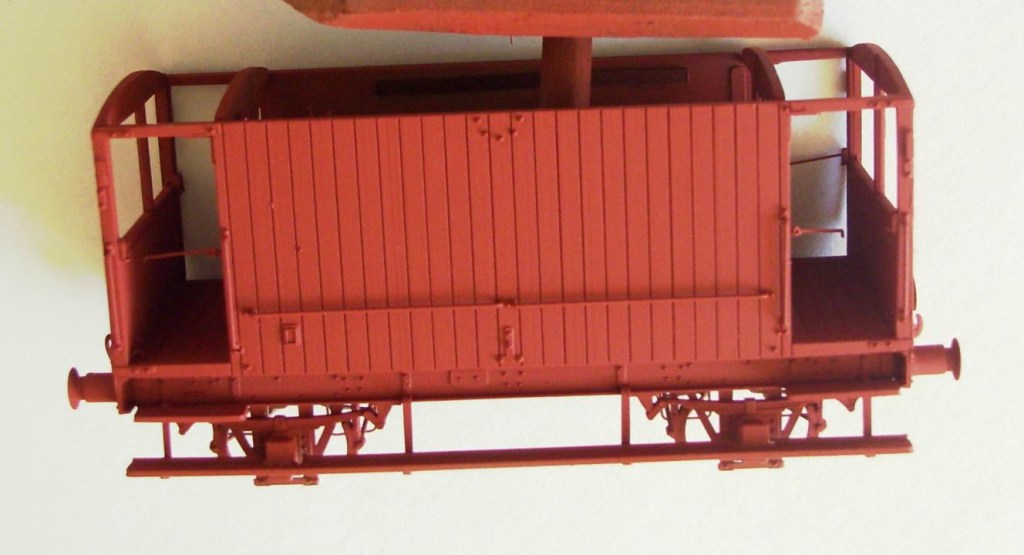
This is the state of play for Allan’s latest 7mm scale coach. Another Sidelines brass kit, this lovely example is a double-window all-panelled brake third.
This is the smart looking home of Wellsey – a 7mm scale model set in Edwardian times and based on the railways that served Wells, The cabin was built in around 2008. Originally it had cantilevered wooden decking outside, but this had rotted and has been removed. Running repairs have been made to the base of the cabin prior to some paving being laid and steps provided. This required some ingenuity as the exact cladding profile used originally is not available off the shelf.
Instead Dave sourced some hand machined and shaped Larch from Devon Sawmills near Taunton. It is a bit rougher finish than the original, but about four times as dense even though it is properly seasoned. He could just about pick up and move one of the 6m pieces on his own, so he repurposed an old car jack to hold it in place while he screwed it on. Dave claims that the original timber is Transylvanian Balsa and is guaranteed to live forever – at least that’s what the tall pale salesman told him as he melted into the twilight.
This is the current state of the railway inside – not much has changed in the last four years because of life’s little challenges. There is a bit more stock now, and (most importantly!) he can run trains round and round. He has painted the track on one board ready for ballasting, and installed one of the superb S4 Society lever frames to work the East Somerset yard so that’s some progress. Which reminds your editor that he has more ballast to make both for Dave and Evercreech New.
A quiet couple of months, part of the reason for the hiatus in blogs, but again with the benefit of considerable foresight things will improve. May is when we have a AGM, and faced with increased costs (electricity and rent) we voted for a modest increase in subscriptions. In other news, work on club and members layouts continues with much effort focused on Evercreech New and Heyno Junction.
Work on the renovation of 7mm scale St Martin’s Wharf continues, and it’s excellent news that Bob Alderman’s lovely brace of Model T railbuses was in the St. Martins Wharf stock box all along – cunningly disguised as something wrapped in bubble wrap. Dave H has fitted a DCC chip in preparation for Taunton and our postponed Open Day. Dave will be fitting the rest of this interesting loco collection with DCC chips over the coming weeks, and Peter C is trying to sort out the wayward trailing axle on the rather nice model of ‘Severn’ (I believe it is a scratchbuilt Severn & Wye prototype) so we can run that too. Most of the stock is in good condition despite its long storage. The layout itself has been running quite happily and (you may wish to look away now) – most of the rat damage has been repaired. St Martin’s Wharf is easy to transport, interesting for us to operate, and we think people will be pleased to see it on the circuit again..
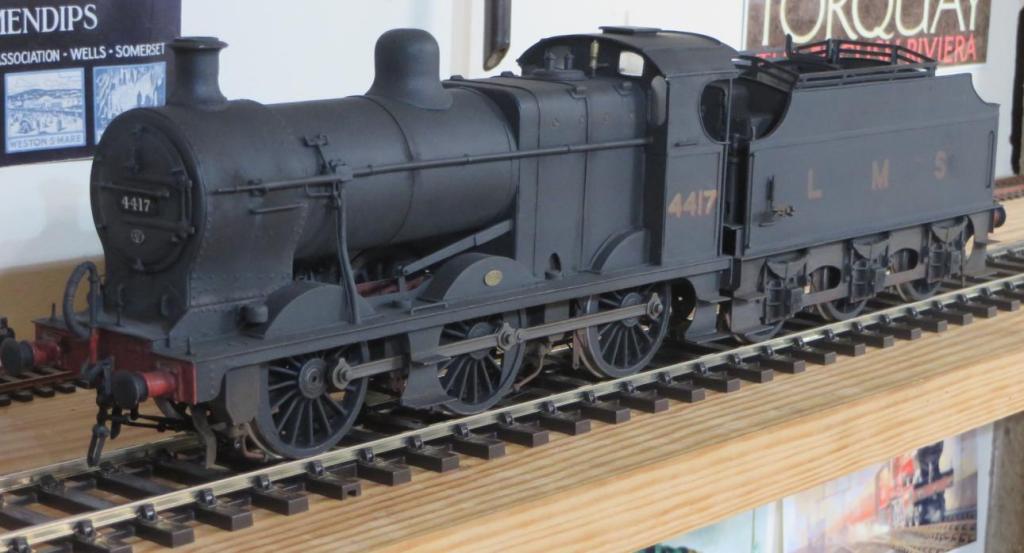
Verwood (set after the war) will need box and mineral wagons in reasonable numbers. Steve saw these on Ebay, but can’t claim them as any sort of rescue (other than from the 00 and P4 mobs) as these LMS vans were all runners and nicely weathered in BR Bauxite, although the underframes could do with more rusty goodness. From the same seller (and stable) were three superbly weathered EM gauge mineral vans that he would also have liked for Verwood, but sadly they went for what he calls ‘silly money’.
It’s been a while since the blog has been updated, and this has not been due to a lack of activity amongst members. With the benefit of foresight, there is some very interesting and high quality modelling in this and upcoming blogs.
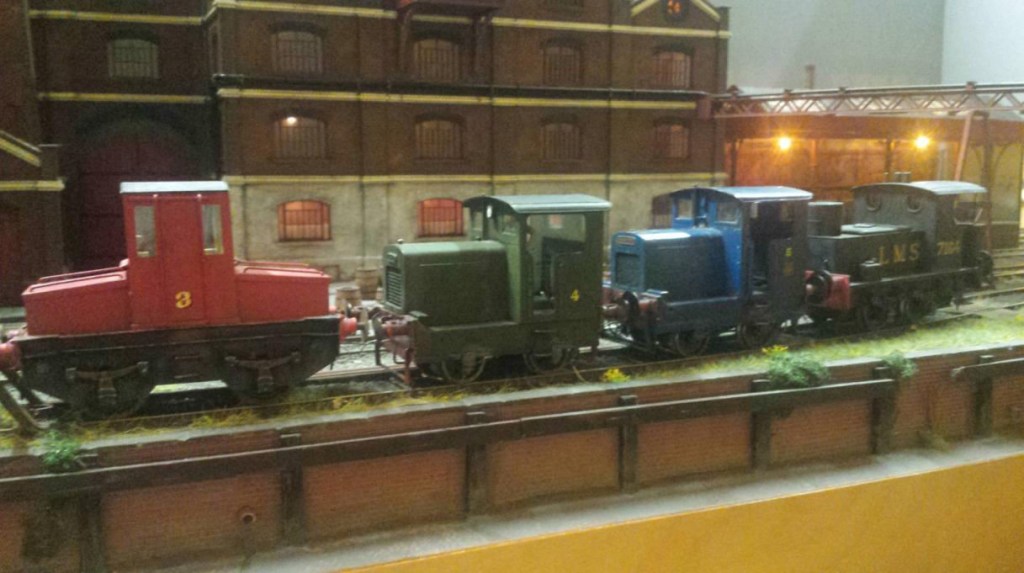
Peter has now nearly completed his Ruston 88S diesel shunter. Apparently, he initially fitted the cab the wrong way round, and you can absolutely see how that could happen!
Dom has made a superb job of weathering a Hornby van ‘C’ using washes, powders and a bit of Humbrol aerosol enamel paint. The whole effect is as I remember them, except this one you can tell might have been red, or perhaps maroon, whereas in the ’70s it was hard to tell if they had once been red, green or blue, as these vans never seemed to get a clean between paint jobs. The underframe has that dirty, rusty but well used look that I remember too, and reminds us just how good recent ready to run models are.
Having made the van up into a train on 00 Gauge Combe Town for a photo session, Dom realised that layouts, even ones conceived partly as photo planks are not great for photography. So in comes the latest distraction from the layout…
The picture above shows the current state of play of a double track “Photo Plank” on a raised embankment with a cattle creep and backdrop.
Jim has been busy on DIY projects since his move, but did break the bank at the London Festival of Railway Modelling (aka “Ally Pally”) and treated myself to a Farish Class 319 4-car EMU – mainly for sentimental reasons as he spent years of his life riding in them daily from Bedford to Elephant & Castle! The uninspiring Thameslink livery was also the cheapest option – still £250 though!! The four cars need the wheels replacing with 2mm finescale ones, of course, but he was impressed to see the couplings have electrical connectors so only one DCC chip is needed:
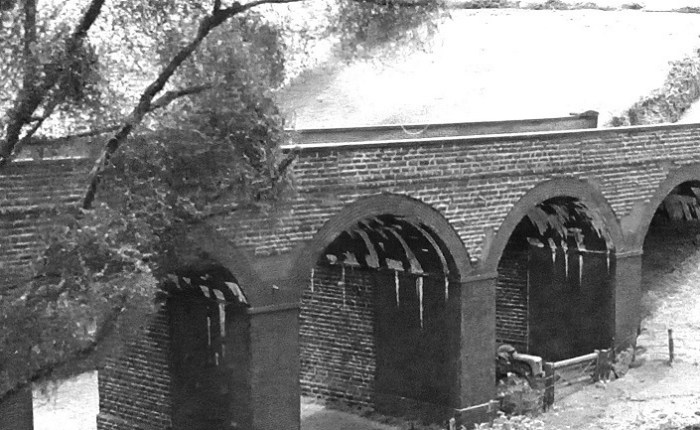
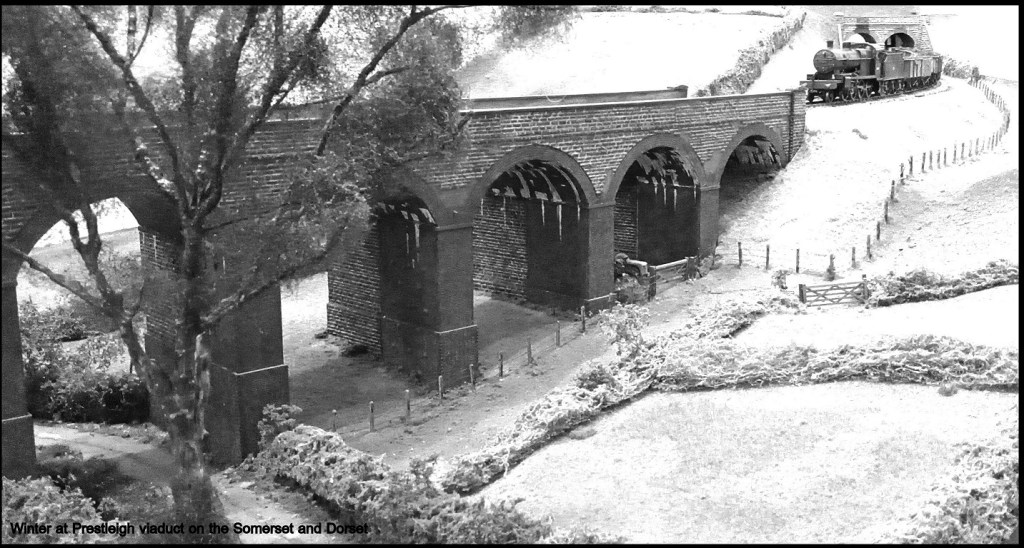
This stunning seasonal image of our model of Prestleigh Viaduct on Evercreech New arrived in our inboxes from Allan wishing us all a Merry Christmas. Quite how this magic was done is a mystery to your author, but we trust that the virtual caster sugar made it safely back in its packet before it got damp.
Allan has an excellent 4mm GWR layout called KingsFerry, and this layout has by far the most visited page on the website. But, like many of our senior members he has been infected by the 7mm virus – those of us who have not been so contaminated, did warn them to mask up and wash their hands! Anyway after building some wagons and an ex LMS 4F, Allan is now building a rake of LMS coaches to grace Evercreech New and The Summit. Above is a photo of Allan’s second 7mm coach project, a Sidelines 7mm LMS two-window panelled open brake third of 1927. It is one of 55 built to diag. D1693. Allan has yet to build the bogies, the interior and corridor connections.
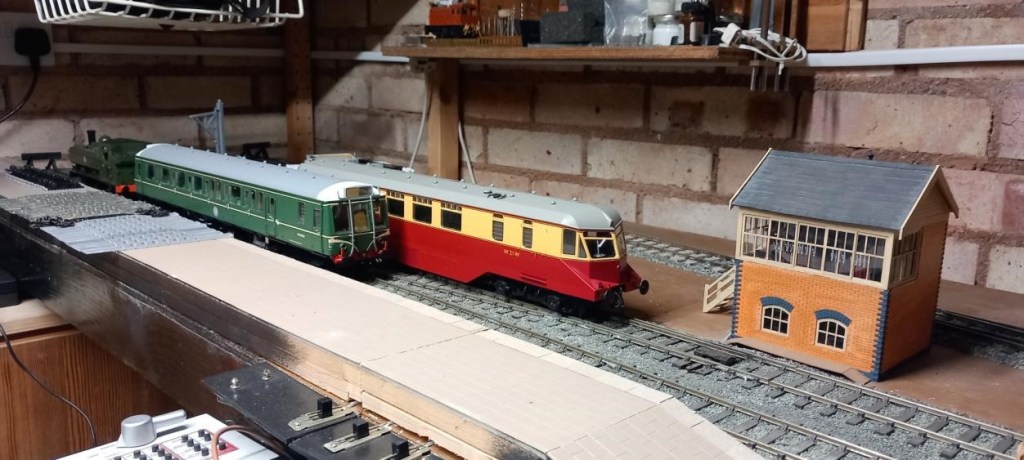
Jim A has splashed out on two 7mm scale diesel railcars for his Forest of Dean themed shunting plank which is housed in his garage. The green “bubble car” represents the last period on his layout before closure, whereas the former GWR railcar represents the 1950s. The former is Dapol, the latter Heljan.
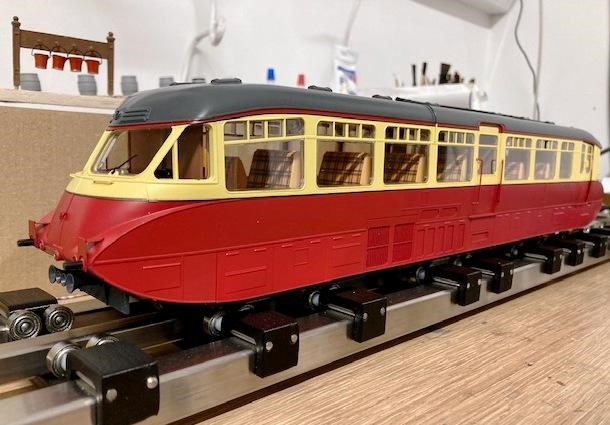
Not to be out-done, Simon K has gone for the streamlined version for his new project oulined below.
In contrast to his large S&D-themed garden railway, Simon is building a 7mm scale shunting plank with a small station called “Cerne” (as in Abbas). He tells me “it comprises three 1200mm by 600mm boards, two scenic and the third a turntable fiddle yard. Pictured are station building and signs, and aview of the track work from over the entrance to the fiddleyard. Platform on left, goods shed back right on the long siding and signal box will probably be in the right foreground.
Without giving too much away (like how he did it), Dom has spent a couple of weeks on crutches, thus gaining quite a bit of modelling time, and so has made progress on 4mm scale Combe Town. The point rodding is down on the first scenic board, he’s made a good start on the ground cover in the yard, and the road embankment up to the bridge has grown hedges. His 14xx has gained sound, and the obligatory Modelu crew has been painted and have clambered aboard. Happily he was quickly back on his feet, and expected progress to slow again.
In February our Chairman Ed, was coming to the end of an intensive training course to be a guard with South Western Railway. After which he will know the difference between the opposite ends of Class 159 EMUs (there isn’t any!) plus all the aspects of the infrastructure controlled by Network Rail at Basingstoke. He’ll also always find room for my bike – OK, I made that bit up!
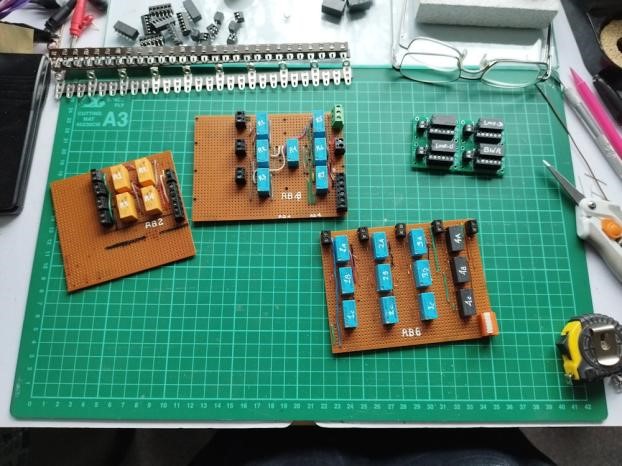
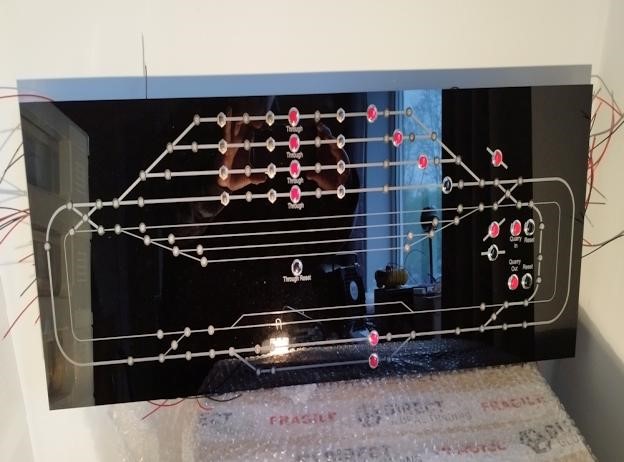
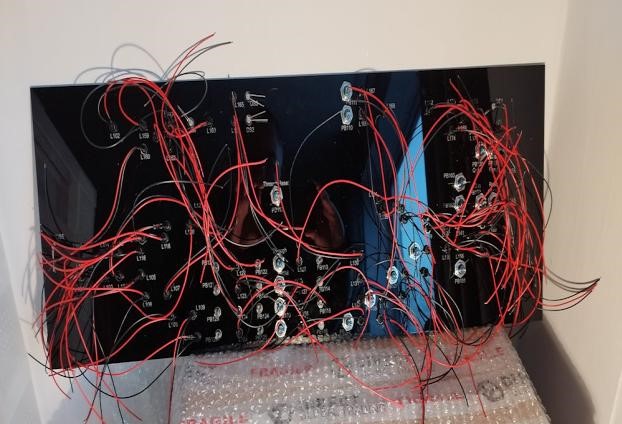
Our former Chairman Dave S now in exile in a lovely part of North Wales, has found time to work on the control systems for the Fiddle Yard of our N Gauge layout The Bank. With the move it’s taken a while longer than anticipated, but there’s no way that Dave will issue them properly until he’s drawn and checked them. It all takes time, and so to a few pictures:
Just some of the diagrams needed for the whole layout.Three main relay boards (RBs) for the Down Control Panel. RB2 controls the cross over. RB4 sets which Fiddle Yard (FY) siding is required. RB6 sets which track in the FY is selected for the through route. It’s like the radio buttons on The Summit/Evercreech New control panels only takes up more space. The odd numbered relay boards are used in the Up Control Panel. The group of four relays are for Up/Down Loop selection and the one labelled BWR is used when the Banker is waiting, in the Up Loop, to go back to the Up FY.The Down Panel with all its push buttons (PBs) and LEDs installed. The four red PBs and one black one use RB6 mentioned above.The back of the panel having a bad wire day, with all the PBs and LEDs identities etched into the panel for ease of wiring it up. The red/black wires are from all the “white” LEDs, as bought, with dropper resistor included.
All looks too complicated? Not really, it’s just a push button setting lots of other switches, with lots of wires connecting it all together! Yes, Dave…
Dave H has built a ScaleFour Society etched nickel silver kit as a ground frame for the East Somerset yard on Wellsey. Recommended by Steve (whoever that is), it’s a neat little kit which incorporates clever mountings for some microswitches inside, has working sprung lever catches and nice turned steel handles for the levers. At about £6 per lever it’s good value. It has etched number plates included too. All Dave has done is to make some mods to make it dis-assemblable if one of the switches pops. It stands about 4 inches tall, so about 1/16 scale. As a non-member you can buy these at exhibitions attended by the S4 Society stand, so in our cases this was Railwells in August.
Steve has spent rather too much time on his crane kits. By popular demand (well, not that popular) he has produced a ‘Swanage’ crane where the frame is reversed and the gear wheels have eight spokes.
There are no decent pictures of the crane at Swanage, but this representation captures the ‘look’ to the satisfaction of the first purchaser, a chap in Hampshire who’s building Swanage in 7mm scale. There is also now a ‘Wimborne’ version (the up side one) that is a ‘Verwood’ crane (so with safety guards) printed in reverse. Steve has takers for two of those in 4mm. Perversely it’s the ‘Verwood’ crane (safety guards) that doesn’t sell so well, and the ‘Semley’ one (no safety guards) that has sold best of all.
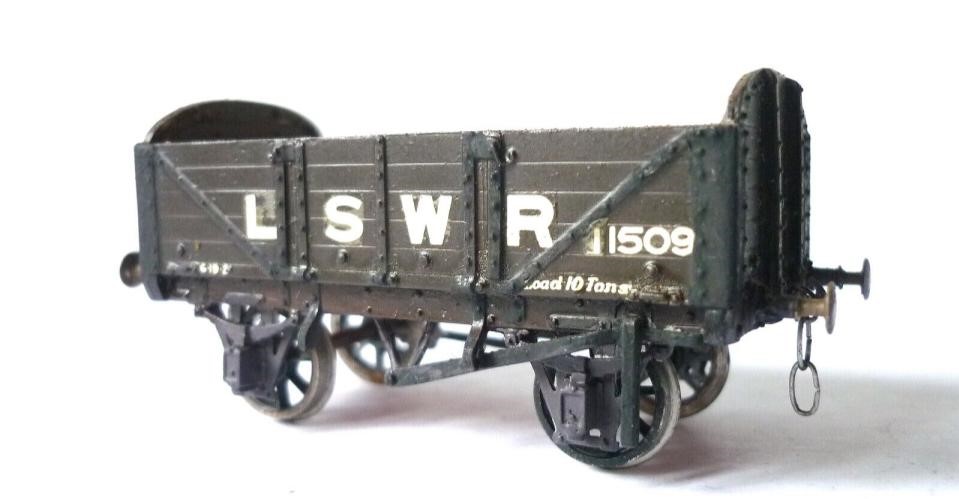
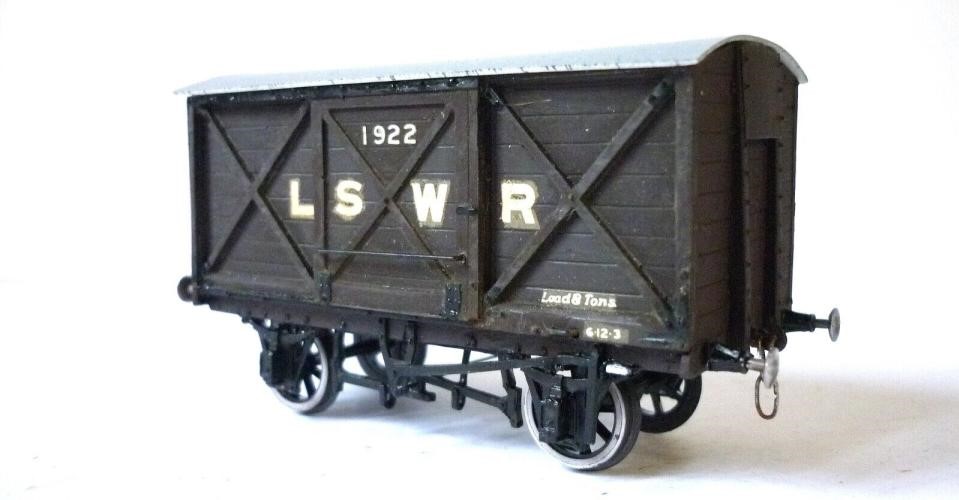
Lastly (for Steve) on Ebay he ‘won’ a box van and an open wagon, both very LSWR in design, though essentially obsolete for BR era Verwood. He’ll lose the transfers, add black patches for BR numbers and pretend that it’s all OK. The box van is a Maple Models resin kit from the 1970s. Both in EM and very well built, they were less expensive than the component parts would be – if you could find them.
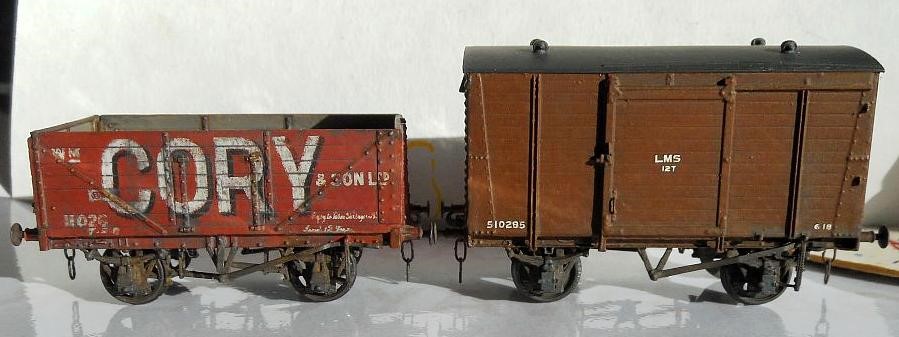
Another member of the EMGS South Somerset Area Group, EM gauge wagon rescue sub-group is Adam. His recent Ebay rescues were largely supported by Delay Repay disbursements from South Eastern Railway – the joy of periodical commuting. The finished ones all came from a batch of rather erratically completed EM vehicles which had suffered through the years and were consequently very cheap indeed (what he paid would have been a fair price for the wheels.
All have been refurbished with some new parts: the LMS van and Cory mineral will become part of a ’30s-era freight which will guest on the still nowhere complete layout.
The rather tatty grey van (in pieces – it’s now in many more bits, because superglue isn’t a viable adhesive for whitemetal wagons), turns out to be a NER diagram G2, by David Geen. At some point it will be stripped and soldered back together; it will still cost less than the kit would have done, even were it still available, and will be an interesting exercise.
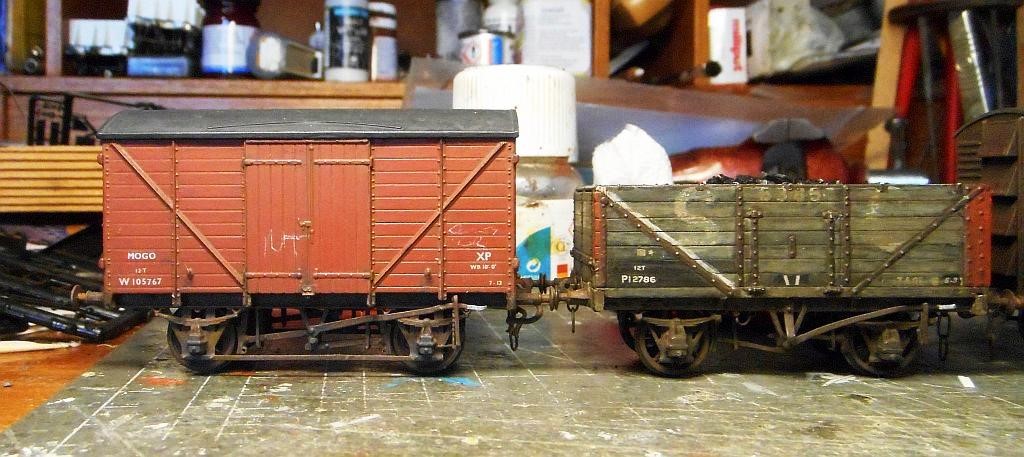
The BR-era vehicles consist of two vans and a now very heavily weathered mineral wagon, modelled after one of Stephenson Clarke’s enormous fleet as it might have looked towards the end of its life. The Airfix Meat van (red plastic and all) had a new roof and chassis, but that is the original paint and Airfix transfers. More anonymous is the Ratio MOGO which just required new buffers and a repaint.”
In other news The Summit has been pencilled in for the Bristol (Thornbury) show in 2025 or 2026. Work has started on titivating Bob Alderman’s St Martin’s Wharf layout for a visit to Taunton Rail-Ex in October. Planned work will include converting the layout to DCC control in a manner similar to Gas Works. Most importantly, despite the cold, the ice cream van has appeared outside CS2 to much aclaim.
December saw a presentation to former Chairman Dave S, prior to his move to North Wales. Dave has been a driving force behind club activities for many years, and is one of the original members from St Michael’s Church Hall days. A surprise leaving event was held for Dave at CS2, and his leaving cake and the presentation by our current Chairman Ed are pictured above.
Also in December was the welcome return of the one day show at West Camel, held this year on Friday 30th December. The West Camel MRC committee asked us to bring along Gas Works. The show was very busy, and not only was the car park full, but eventually so was the approach road leading from the lane, and cars were parked in the lane itself.
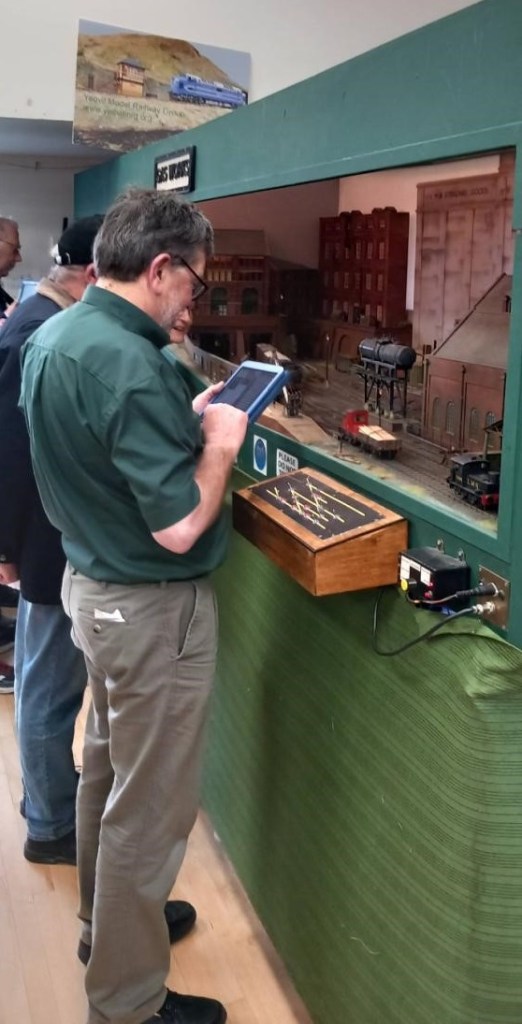
Since its last outing, Gas Works has been converted to DCC using the Z21 system and cordless handheld controllers, such as mobile phones or tablets. This system has proved very successful with Evercreech New as it allows operators to converse with the viewers as they are controlling the trains around the layout. In the case of Gas Works, it means an operator can closely observe a shunting manoeuvre on the left hand board, and not be constrained by the controller being on the right hand board. Dave H is seen operating the layout using a tablet.
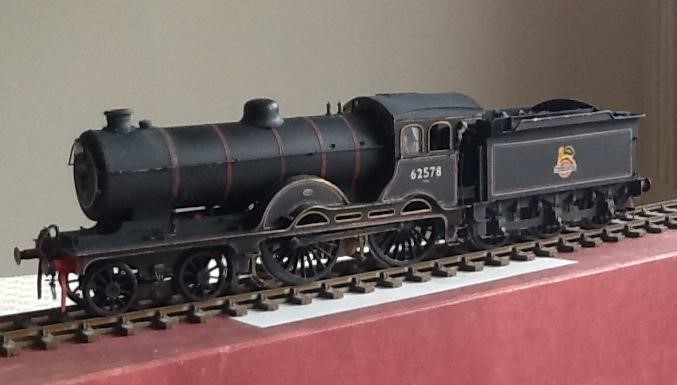
John has finally finished his ex-GER Class D16/3 and a fine looking model it is, this photo not really doing it justice.
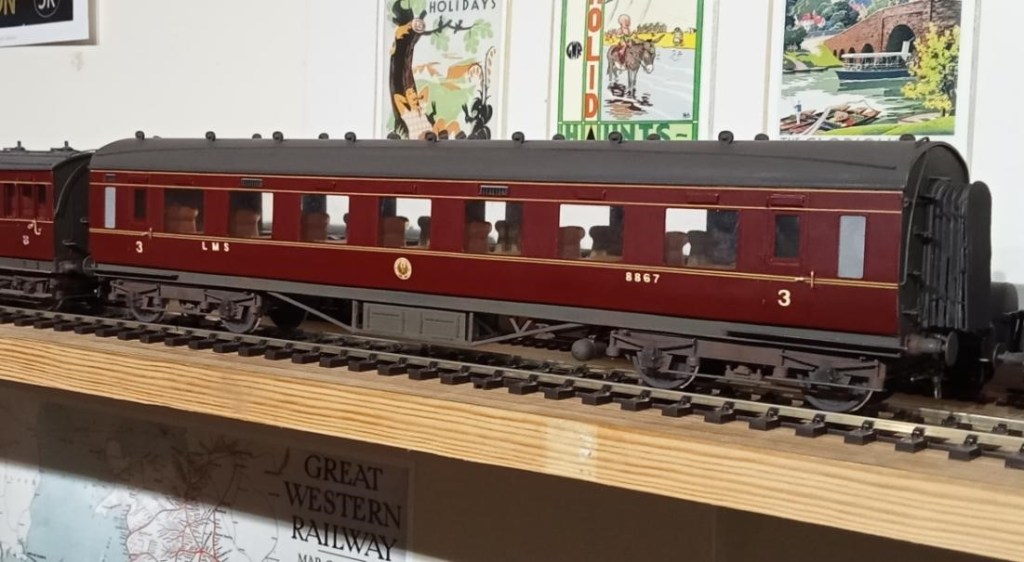
Another completed project is Allan’s steel bodied LMS vestibule third, constructed from a Sidelines kit. Allan hasn’t added the corridor connector supports as the connectors need to be flexible when joined up in a rake. He plans on building quite a few more, all LMS of differing vintages. Next will be a panelled open brake third.
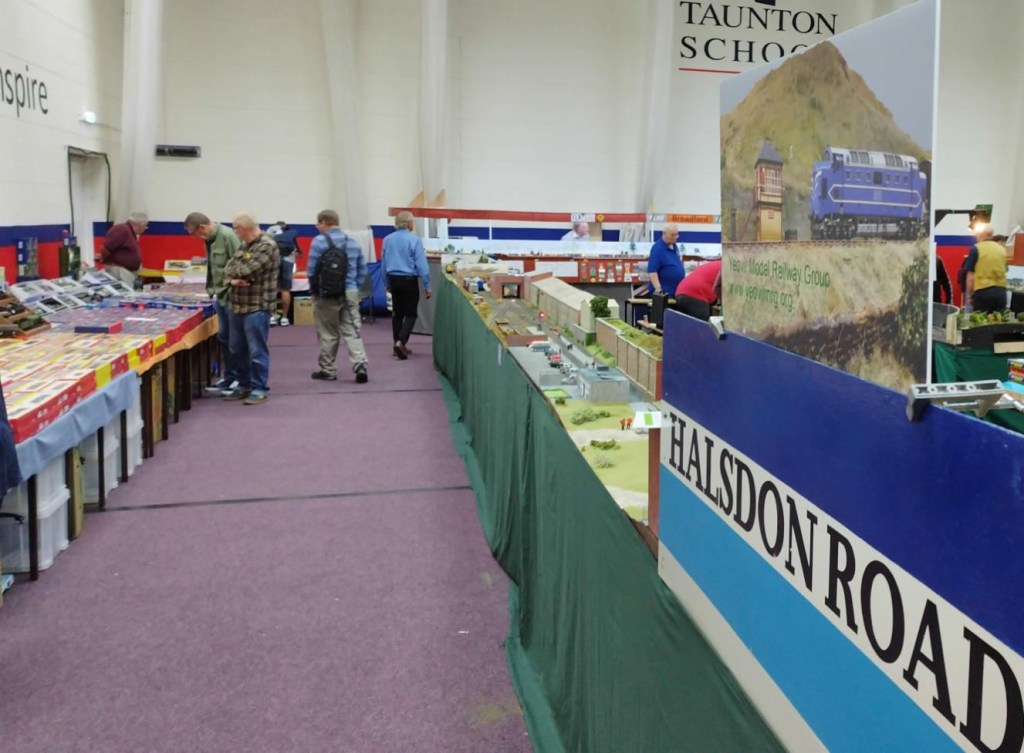
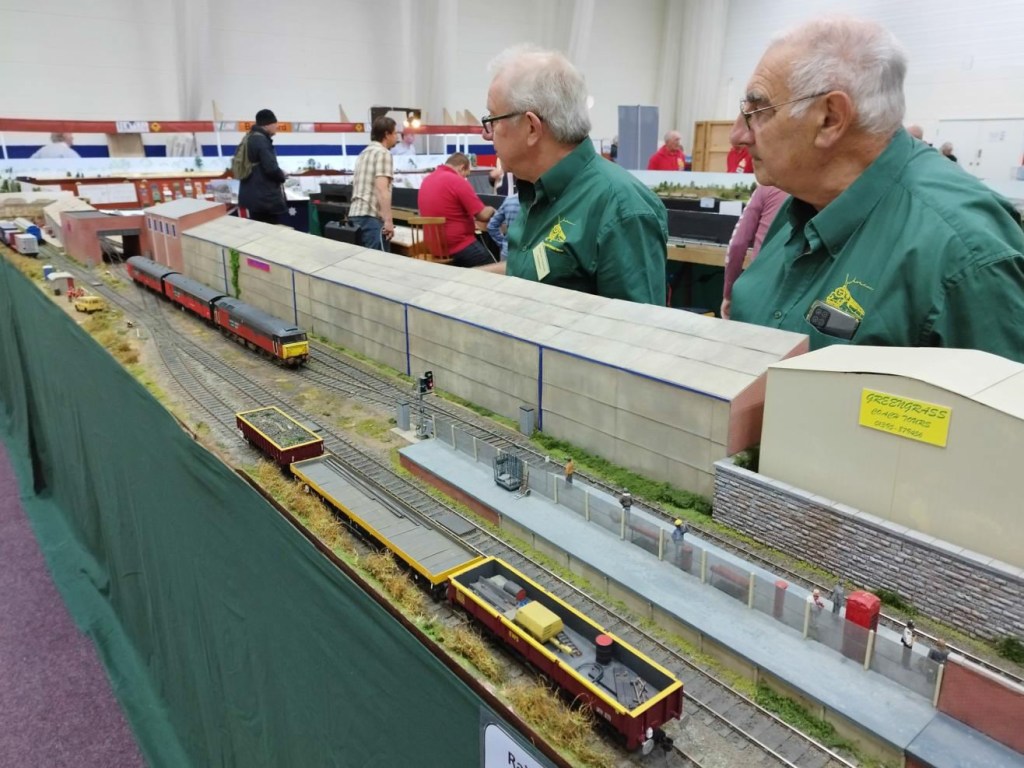
The big event for the club in October was the much delayed appearance of Gary’s 7mm Scale 0 Gauge Halsdon Road at Rail-Ex Taunton. In the week leading up to the show, Gary went down with Covid. Consequently, it was left to Dave S and the Gang to take it down from CS2, cart it to Taunton in the horse-box, put it up, operate this private layout for two days and take it back down again.
This exceedingly long layout erected, awaiting curtains, and almost ready to roll the evening before.
This excellent show was much, much busier than it seems here – honest!
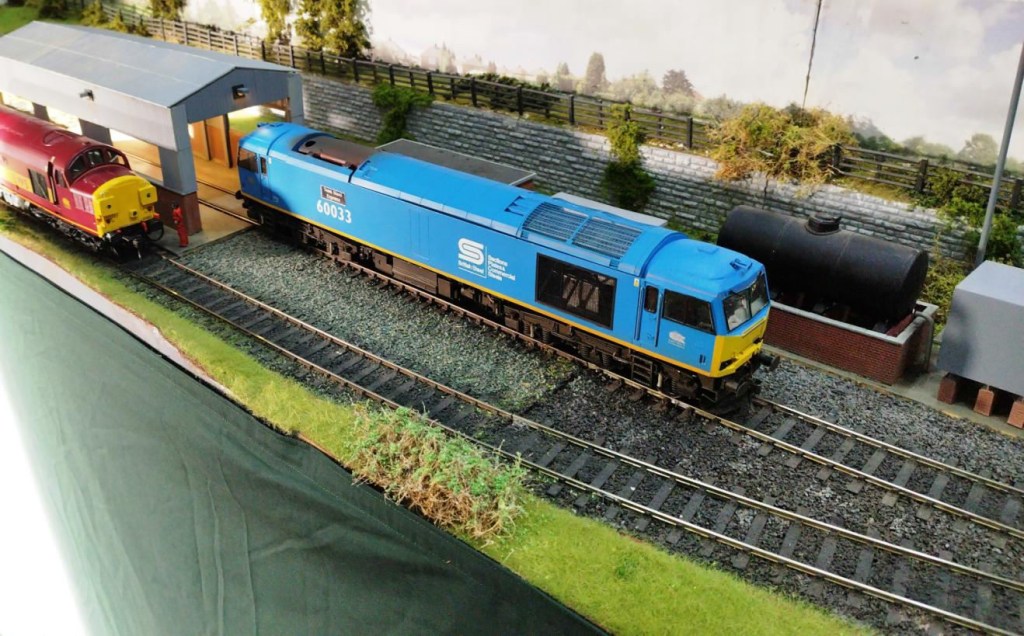
Halsdon Road is set in the post-privatisation period and this is the MPD with Classes 37 and 60.
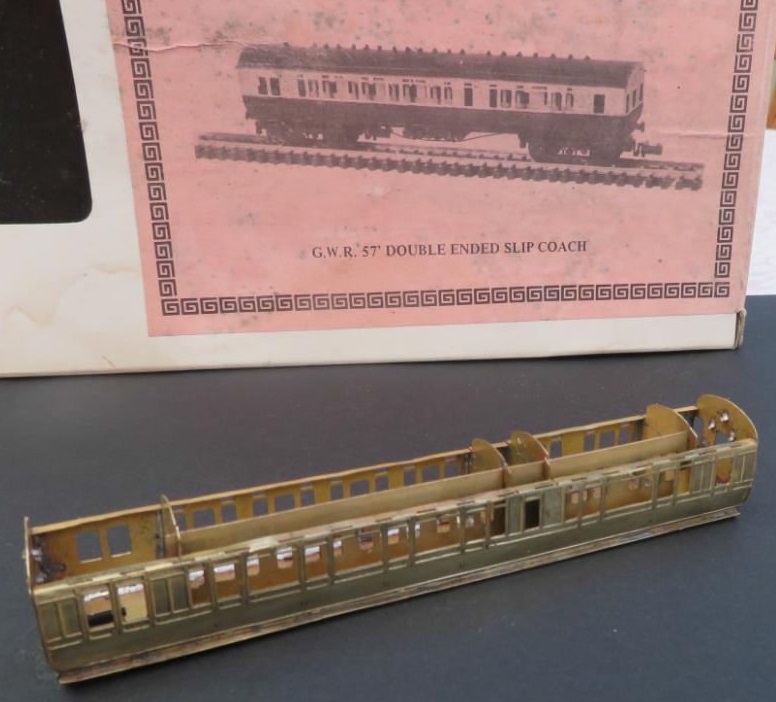
Dean has been soldering up a 2mm scale Langley GWR 57ft double-ended slip coach, which he claims has been in the cupboard for far too long – hopefully he still thinks that!
A glimpse of Deanswear, Dean’s 12ft end to end N Gauge layout, loosely based on Kingswear circa 1930 – halcyon days for the GWR.
Dom is making good progress with his 00 Gauge Coombe Town. He has weathered the Autocoach making a world of difference to the ‘look’. He is now moving on to the rest of the rolling stock, and has also started ballasting as seen below.
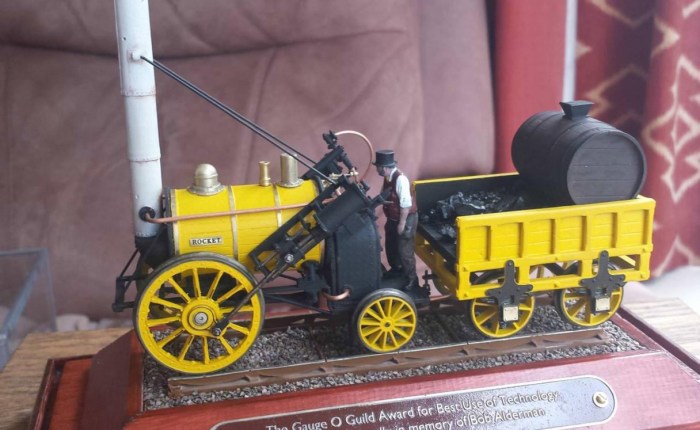
Dave H was busy in the run-up to Guildex at Stafford, just completing in time the Bob Alderman Memorial Trophy – to be awarded for the best use of modern technology – well, The Rocket was modern technology of its day, and a 3D scan of Bob is driving it!
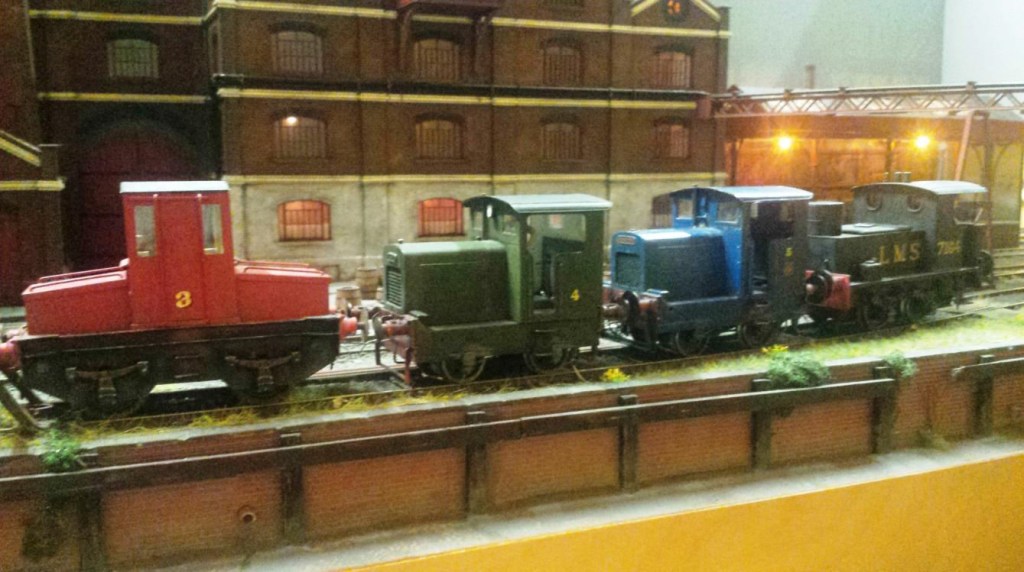
Bob’s last layout Hobson’s Brewery was at the Wimborne Show, the same weekend as Rail-Ex Taunton. These are the locos normally available for the layout. Hobsons Brewery (7mm) was a runner up in the Small layouts competition at Guildex.
This is one of a pair from Dave’s 7mm scale rake of GWR 6-wheel coaches that did well in the rolling stock category at GuildEx. Their construction from styrene sheet has featured before in these posts.
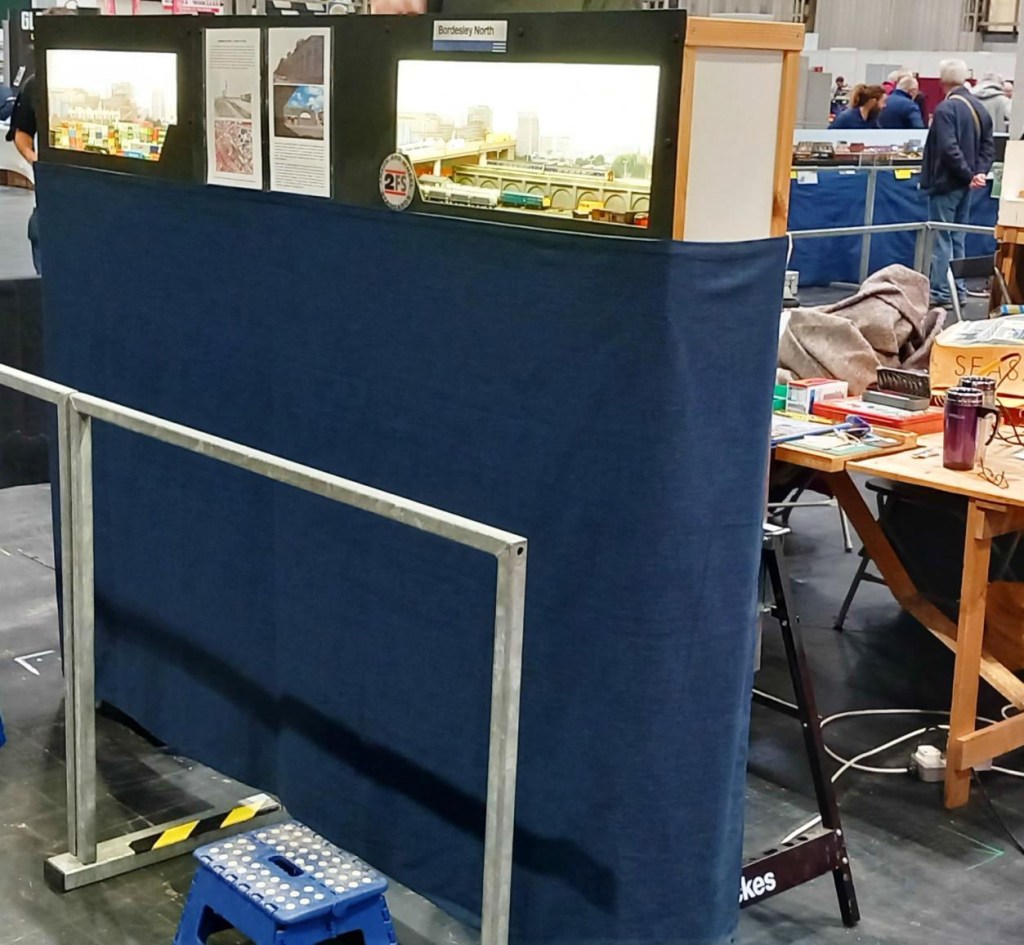
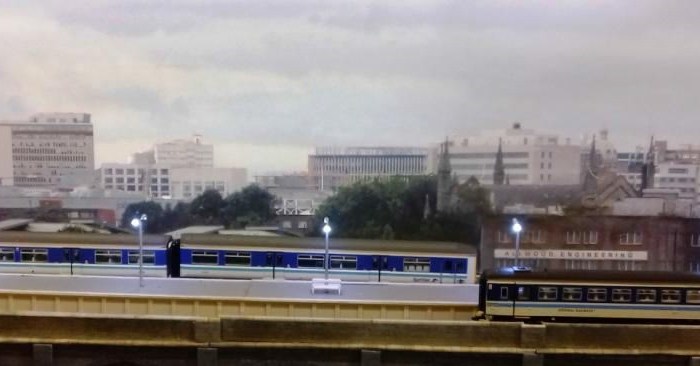
This is Jim’s 2mm finescale cameo layout Bordesley North set up in Hall 5 at the NEC for this year’s Warley Show. Much midnight oil was burned to create the new left hand scene, which shows the edges of the Lawley Street container terminal and associated diesel servicing depot. Not 100% finished in time but it gained good comments – and an invite to another show, this time Macclesfield in Cheshire, even further from home!
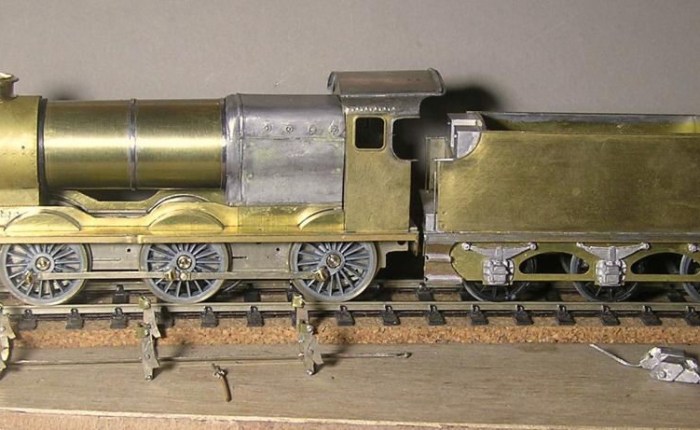
John M has been putting the finishing touches to his 7mm scale D16/3. The loco is now painted, lined and numbered, and ready for the fitting of the bits and bobs that needed protection from the paint, such as cab windows and the cab backhead. The tender has to be coaled and when this work is done it will be weathered and finished. The tender is from a ancient Mallard kit, the loco body is scratch built except for the fancy valance.
What a pity one was not preserved. Alan Bloom at Bressingham wanted one, but considered BR’s asking price of £1,500 too high. This was in 1960 when that was a lot of money. Richard Hardy, shedmaster at Norwich, managed to ‘hide’ the J15 and the B12/3 (now on the NNR) from the suits at Stratford, but the last D16/3 no. 62513 was scrapped.
The front has been tidied up. The smokebox door is a brass casting the origin of which John is unsure. Not all the class had the steel ring bare metal, but this one was a Melton Constable engine, and that wonderful place in the middle of beautiful North Norfolk countryside looked after theirs to the very end. The steel effect on the model is polished 60/40 solder.
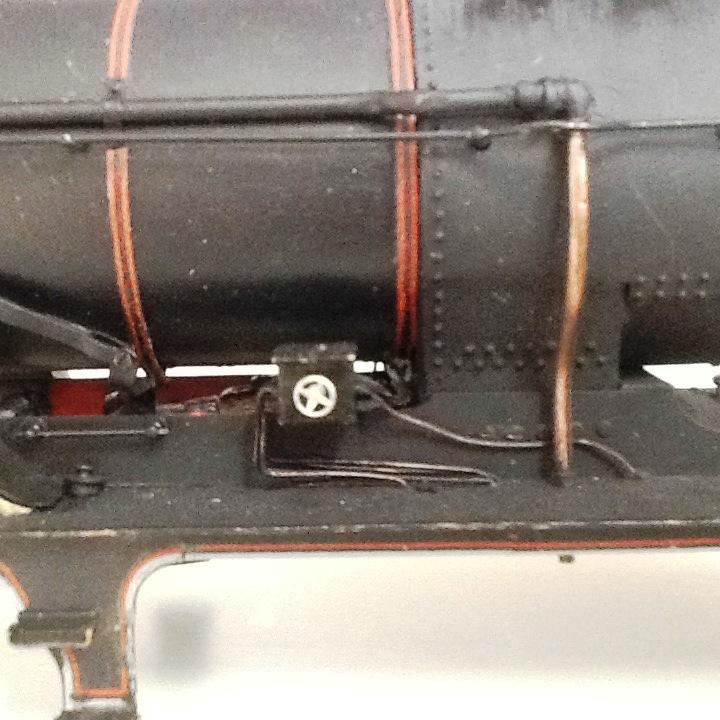
The lubricator priming wheel was the last piece to do until installing fireman Dave S and driver Simon W in their cab after weathering. The casting is exquisite, but John can’t remember where it came from either.
Allan’s LMS all steel open third from a Sidelines kit nearing is completion also in 7mm scale. The door and grab handles are yet to be fitted as well as more detailing of the corridor connections. This is the first of a fleet of LMS coaches that could run on Evercreech New. Next up: a panelled open brake third…..
Pete C (who clearly has a bit of a thing about brake vans) has finished his 4mm scale EM Gauge LMS brake van (Parkside Kit), and has started an Oyster ballast plough as a conversion from the Cambrian Models Shark ballast plough kit:
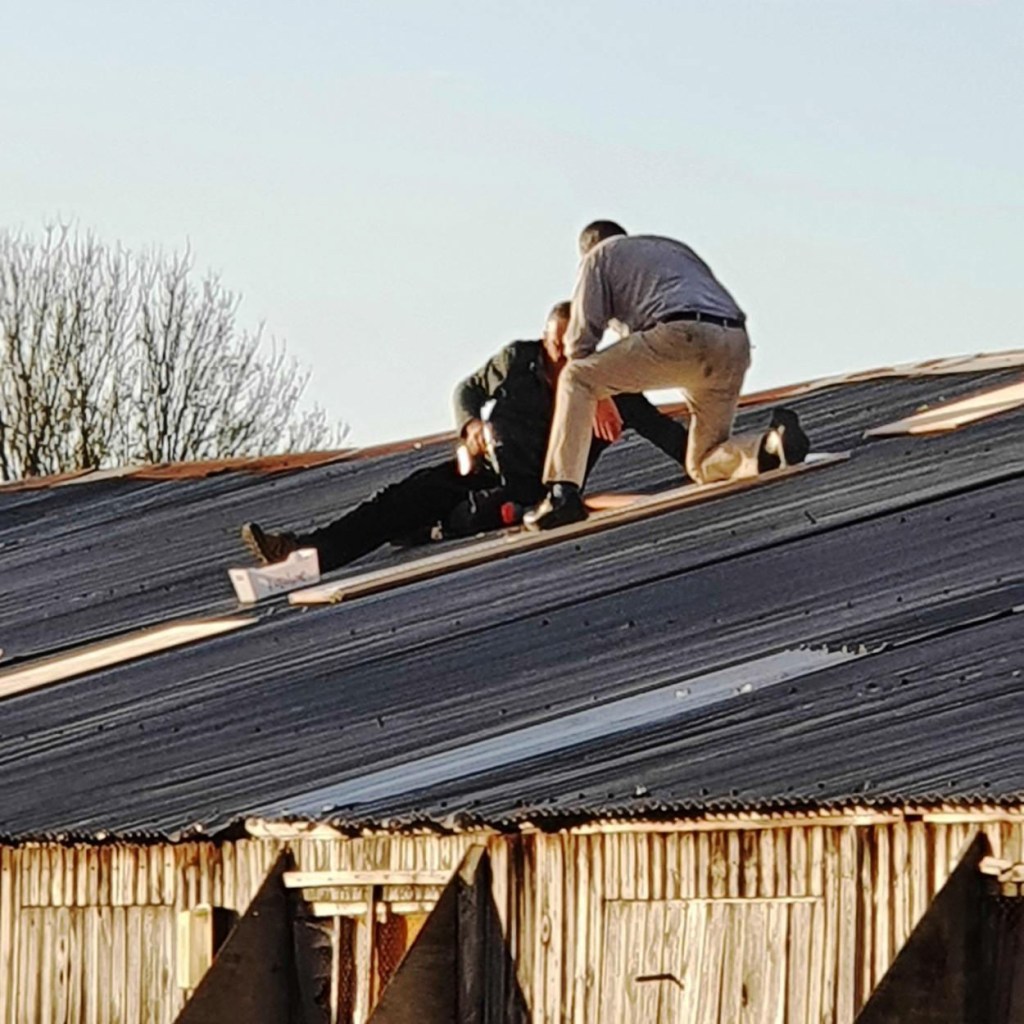
To finish with, on what looks like a lovely Autumn day following a storm, some fiddling on a roof:
Not the first time, and proably not the last time!
This Summer has seen us start the arduous process of realising our Chairman’s scheme to re-organise our clubroom. With a predominance of large layouts – almost all of which will be moving to optimise walkways. It’s a bit like 3D chess and the full scheme may not be realised until the Autumn. The opening gambit has been to erect the ‘Plywood Origami’ AKA Heyno Junction in an area just vacated by Yeovil Town.
Our venerable layout Gasworks has been invited to the West Camel Show on Friday 30th December, and we look forward to meeting at least some of you there. Gasworks was of course the work of the late great Bob Alderman, and so was St. Martin’s Wharf, so I’m very happy to report that this rather special layout has recently been donated to the club.
Dominic had some ballast samples from Geoscenics to try out on the “Photo Plank” ready for Coombe Town. He is also working on a Parkside coal wagon cameo for the other side of the plank. Also shown are a number of Modelu figures painted ready to hit the layout.
If the S15 and the N Class weren’t already so useful and therefore intensively utilised by the Southern, I’m sure that both classes would have appeared on the S&D. Shown on his Nethercreech (S&D) layout, this is the nearly finished S15 that David S has built from a Gladiator kit (with a little bit of help). Smokebox plate, backhead, coal and weathering required to finish it off. It is powered by a very lively Maxon motor and ABC gearbox.
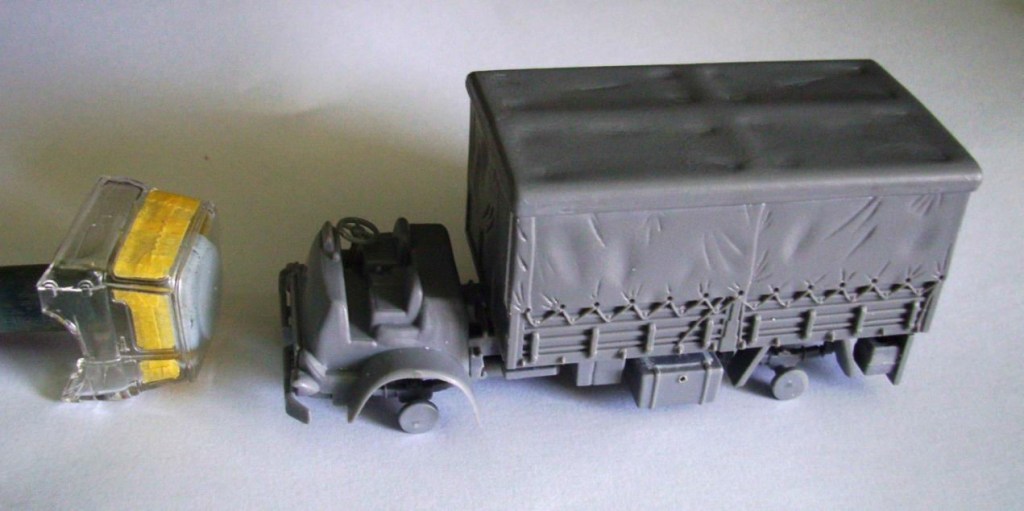
Pete C is working on a Parkside LMS Brake Van and a Bedford MOD lorry from a JB kit:
Dave H is busy converting Hobson’s Brewery to DCC operation ready for GuildEx, and has started on a model of Rocket which will become a prize for modelling innovation for the Gauge 0 Guild.
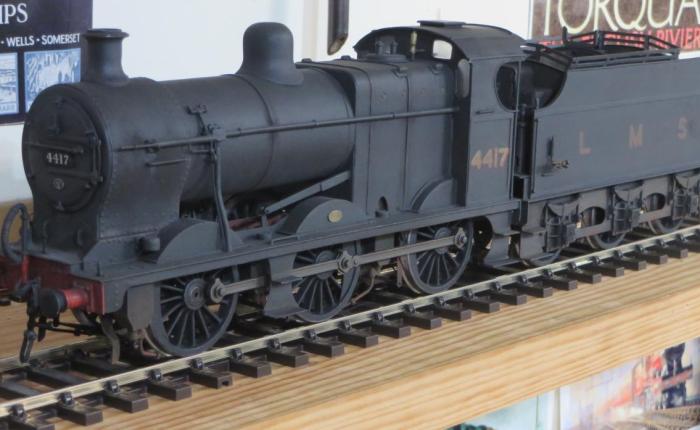
At the start of the summer, in an unplanned development, Steve fitted a tapered brass boiler to the Q in place of the plastic 4F parallel boiler. The taper is very slight, but it is visible and hopefully worth the extra aggro. A start was then made on the cocks for the sand pipes. In the photo is the Q sporting tapered boiler, with in front, demountable brake gear, sandboxes and one of the phosphor bronze sandpipes with teeny sandcock. This is the old Crownline Q Class conversion kit for the Airfix 4F, but the instructions were discarded long ago in pursuit of something that is a bit more of a challenge to build.
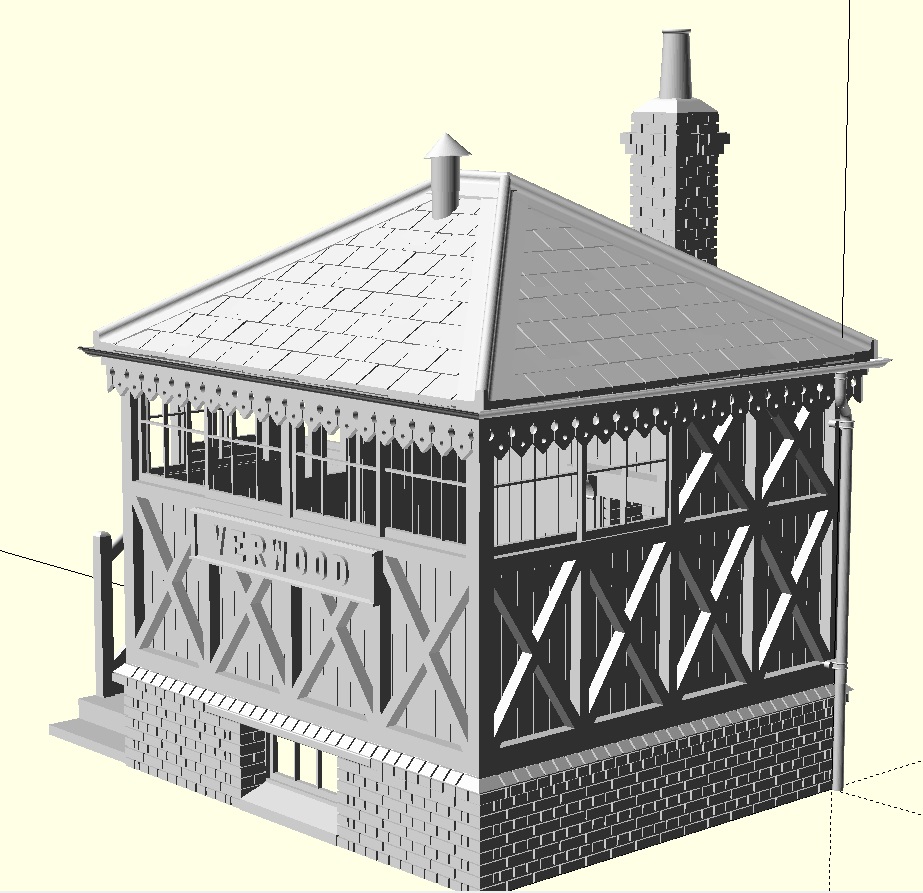
The cheap Mitsumi motor with a modified 40:1 Branchlines gearbox is fitted, and it’s ready for what should be a sprightly test run on South Junction. The build for the Q was paused by a nasty bout of sciatica leaving the builder unable to sit at the workbench for much of the period. Luckily(?), suitably prone, this gave him plenty of CAD time, so he transfered to working up the interior of the signal box for Verwood.
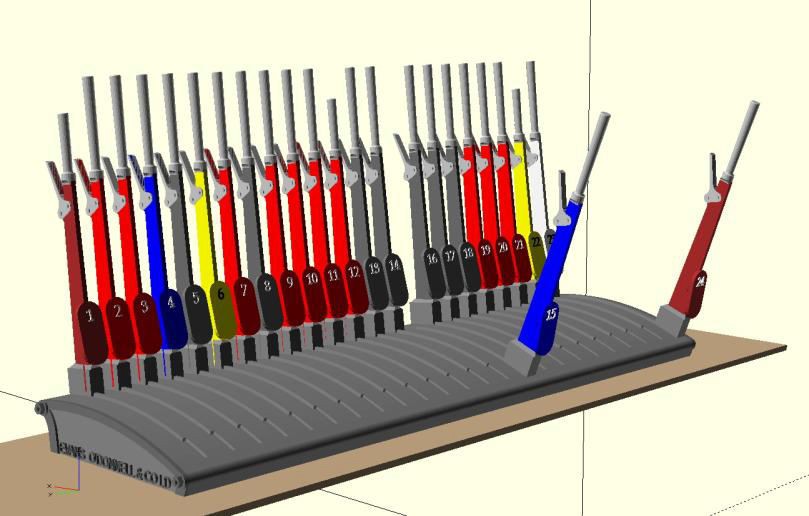
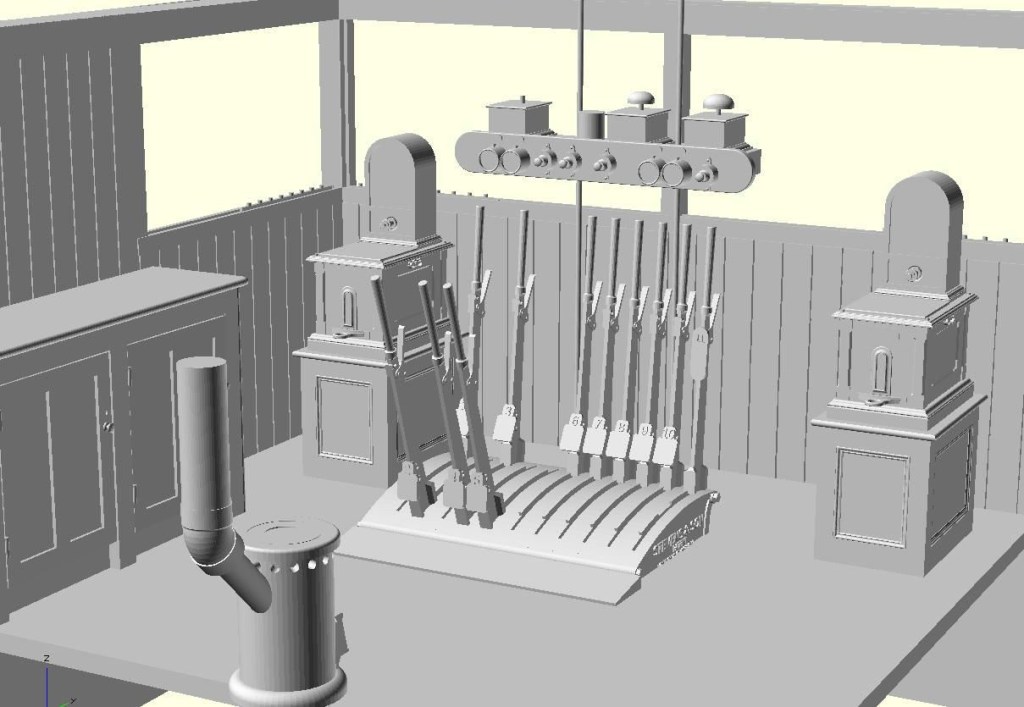
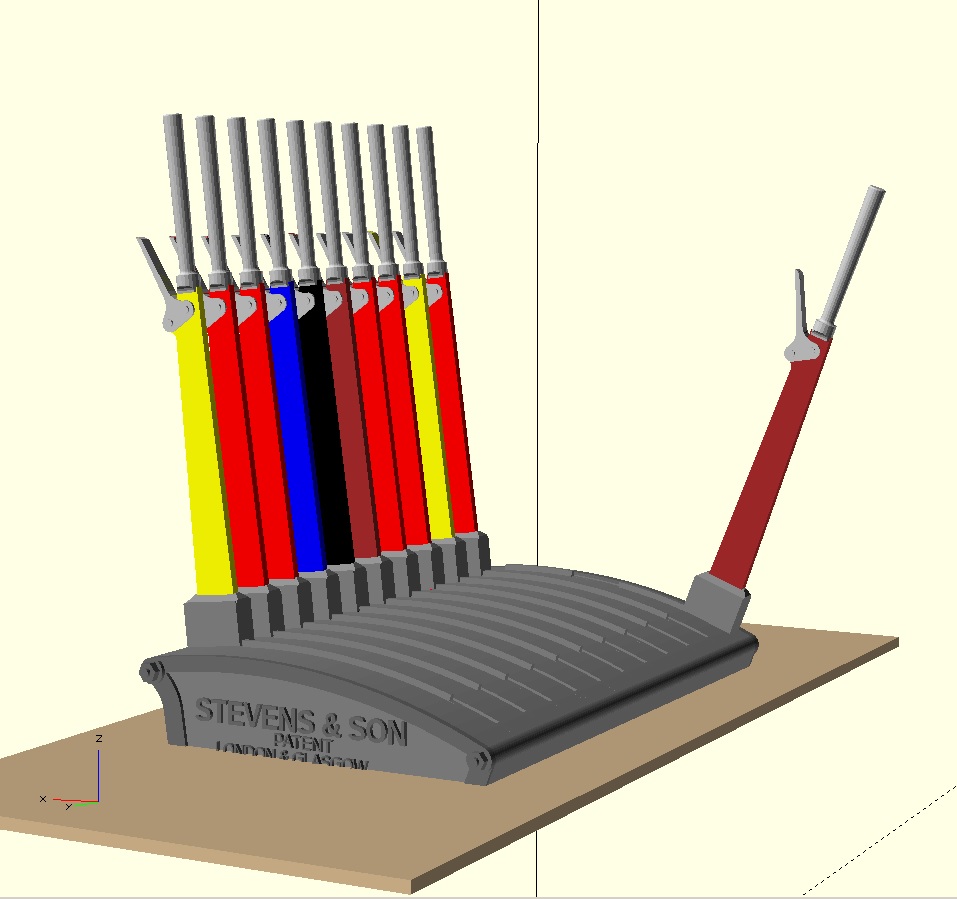
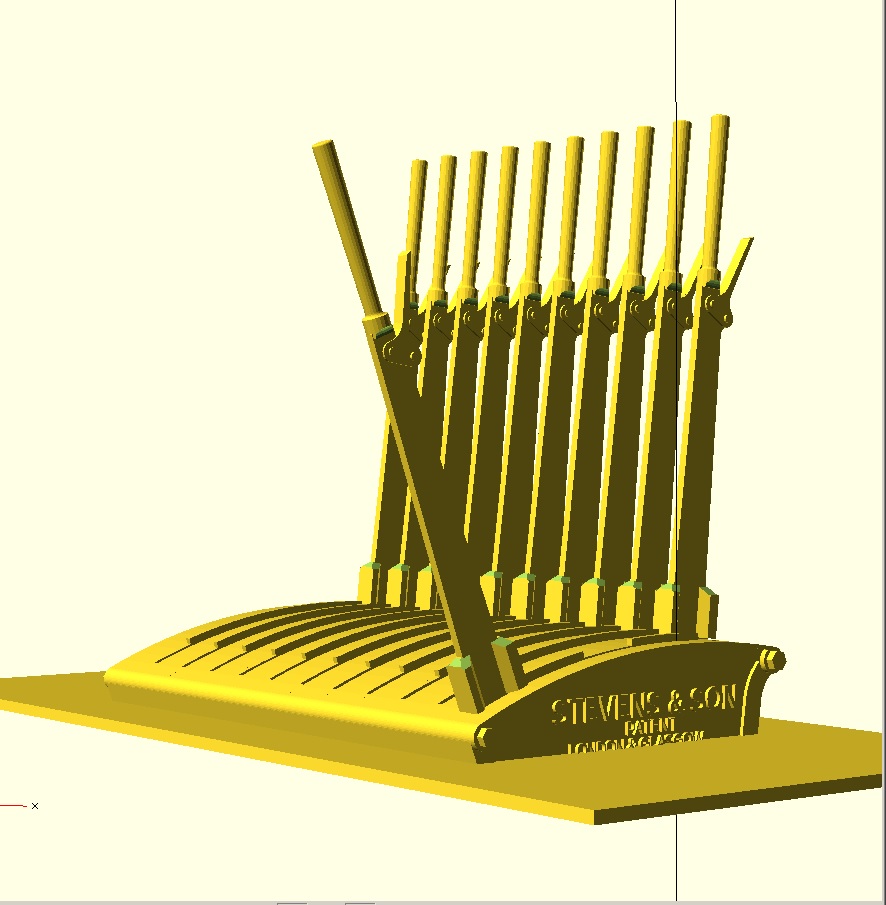
This is the frame at Verwood pretty much as it would look to receive a train from Fordingbridge. Levers 1-10 have LSWR style plates, and ‘new’ Lever 11 an early SR oval plate. Also shown are the LSWR style locking labels.
In contrast this is a 3D render of the much longer frame at West Moors, still to Stevens pattern, but shown here as manufactured by Evans O’Donnell & Co. This frame had some shortened handles and the later SR Oval Plates. Both frames are built from a parameter file, so it is relatively easy to cater for other Stevens London style frames.
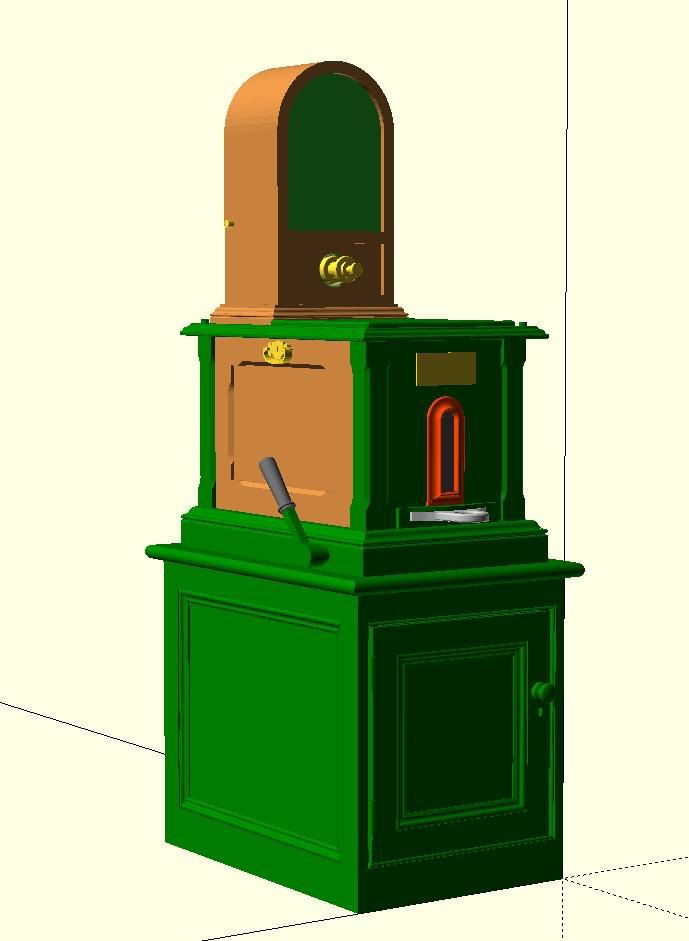
Next up is the Instrument Shelf based on photos of Verwood. This therefore has instruments for a passing loop with bell at one end and gong at the other, plus an extra bell possibly for the ground frame hut or shunter. Next to it is my interpretation of a Tyer’s No.6 Electric Tablet Instrument. Verwood should have had two of these, but the West Moors instrument was in a part of the box that wasn’t photographed so I’ve assumed that this was logically at the West Moors end of the frame mirroring the Fordingbridge instrument at the other end. The poles that the shelf was mounted on will be replaced by holes for wires in the final print.
Below is the rear corner of the box with stove and corner cupboard, and next to it the front of the box with lever, shelf and tablet instruments. The box also now has a 3D printed floor with the tread plate built in and holes for the shelf. It has to be said that in 4mm this stuff is almost impossibly tiny! The cupboard has since acquired a sloping writing desk, with open register and writing instrument.
At the rear of the box was a grey painted signal cabinet with the batteries for the switching out mechanism installed as an economy measure.
And that is quite enough for what should be a quiet modelling season. New members are always welcome and an introductory visit to our club room can easily be arranged from the contact page via our Secretary.
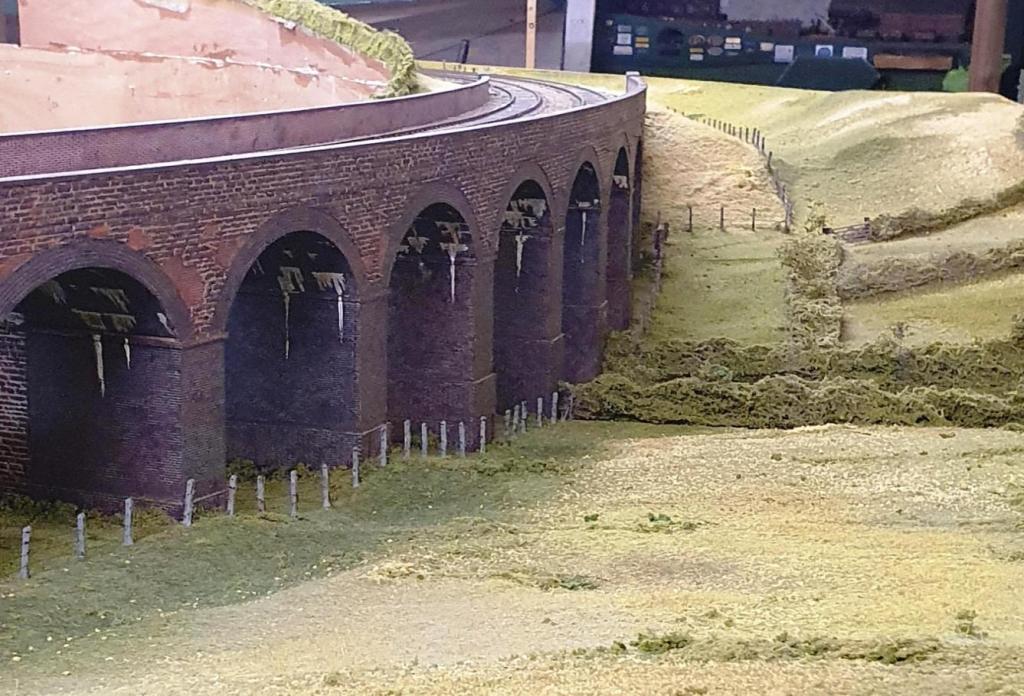
In the run up to the appearance of Evercreech New at the Bath & West Showground a huge amount of scenic work was carried out on the Prestleigh Viaduct board. This board is the size of a small car, albeit a very strangely shaped one!
What a difference!
Normans’ Bridge is the scenic break at the Shepton end of the model and the model was completed during an extended stay in Wimborne from where Shepton stone was recalled as having a greenish tinge that simply isn’t evident in the real location where the stone is somewhat browner in hue. Hopefully a brown wash will fix that! The wing wall capping is of an unusual design, but those level sections can still be seen on surviving under and overbridges along the Bath Extension.
Normans’ Bridge ‘planted’ on the layout. The arches are sections of 110mm drainage pipe which just happen to be the correct radius.
Above Normans’ Bridge is the wooden fence that had been insisted on by the Farmer Norman in charge when the line was built, so that his cattle wouldn’t be spooked by those ferocious steam ginnies.
Over a long weekend in April the collective YMRG membership were involved in transporting, erecting and operating Evercreech New in support of Heaton Lodge at the Royal Bath and West Showground. Heaton Lodge can be seen in the background, Evercreech New in the foreground.
A closeup of Prestleigh Viaduct (and that elusive farm) from sort of balcony launched drone. After three very successful and trouble free days of exhibiting, members continued to rally round to take down, reload the 7.5T lorry and unload it back at the club house. One aspect of large 7mm scale layouts is the volume and weight of the rolling stock required to operate it all to be taken back to homes in member’s vehicles.
In other news the Claude Hamilton build continues with the Westinghouse pump. First up is one of those on something apple green that is very real, but not a Claude Hamilton. And John’s Claude – showing what is possible on 7mm scale model!
Allan H has completed his superb 4F to run on “Evercreech New”. Genuinely his first attempt at any locomotive – all his own work too. Not only beautifully finished, it runs as well as it looks!
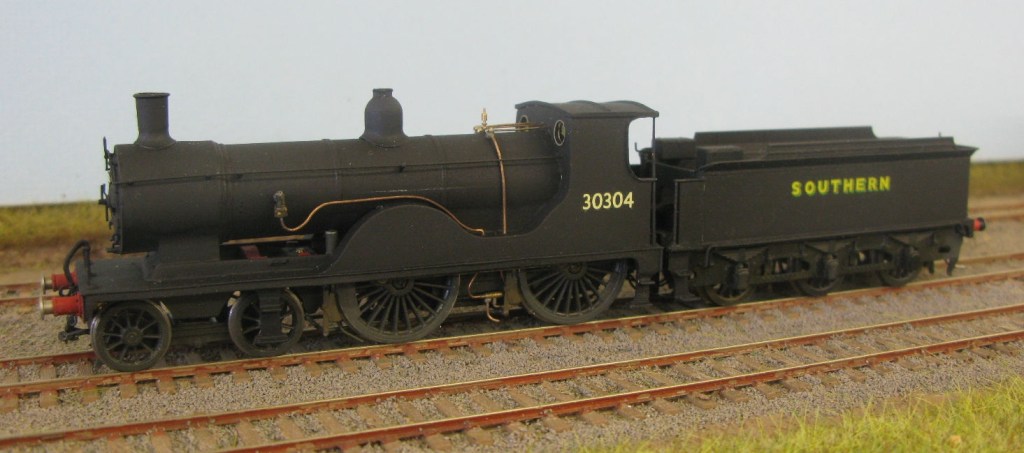
The battered Wills T9 was finished as Bournemouth loco 30304, and returned to its owner after a longish delay due to problems with the DCC wiring. Full story of the build is on Western Thunder. Happily there is a photo of this loco with Southern in sunshine lettering and Gill Sans number as this was an unusual combination. With twin beam compensation and High Level motor and gearbox running quality is more like a bogie coach than a loco.
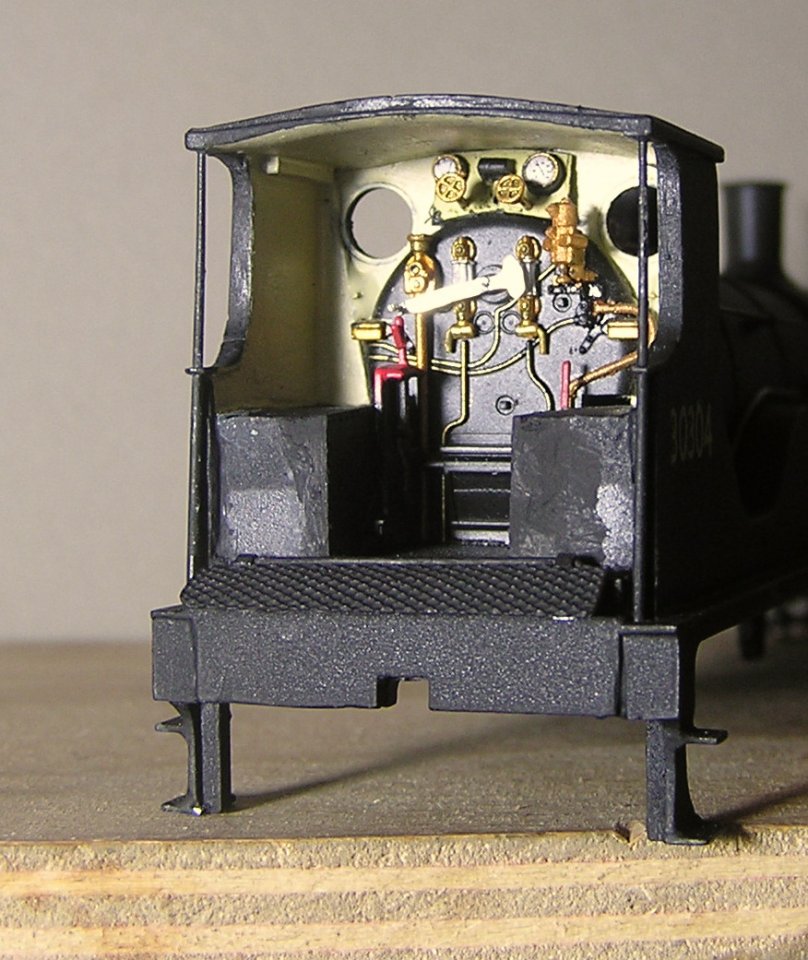
A donor Hornby cab interior – an excellent upgrade for a Wills T9:
Last month “Evercreech New” was dismantled and the track and rear scenic boards of “The Summit” were re-erected in its place. However, the board containing Prestleigh Viaduct was deliberately left accessible so more scenic work could be carried out on it. How prescient was that! Out of the blue, we were invited to take “Evercreech New” to an exhibition at the Bath and West Showground in early April. The main purpose of this exhibition is to show off “Heaton Lodge Junction”, a huge 7mm scale model of said place, which is north east of Huddersfield in West Yorkshire. However, unlike its first solo outing in Wakefield last December, the owner Simon George has decided to show it with other layouts. Given the venue, a mainly S&D theme was chosen. Consequently, Evercreech New will be there, along with a superb 4mm rendition of Bournemouth West, other layouts and well known model traders.
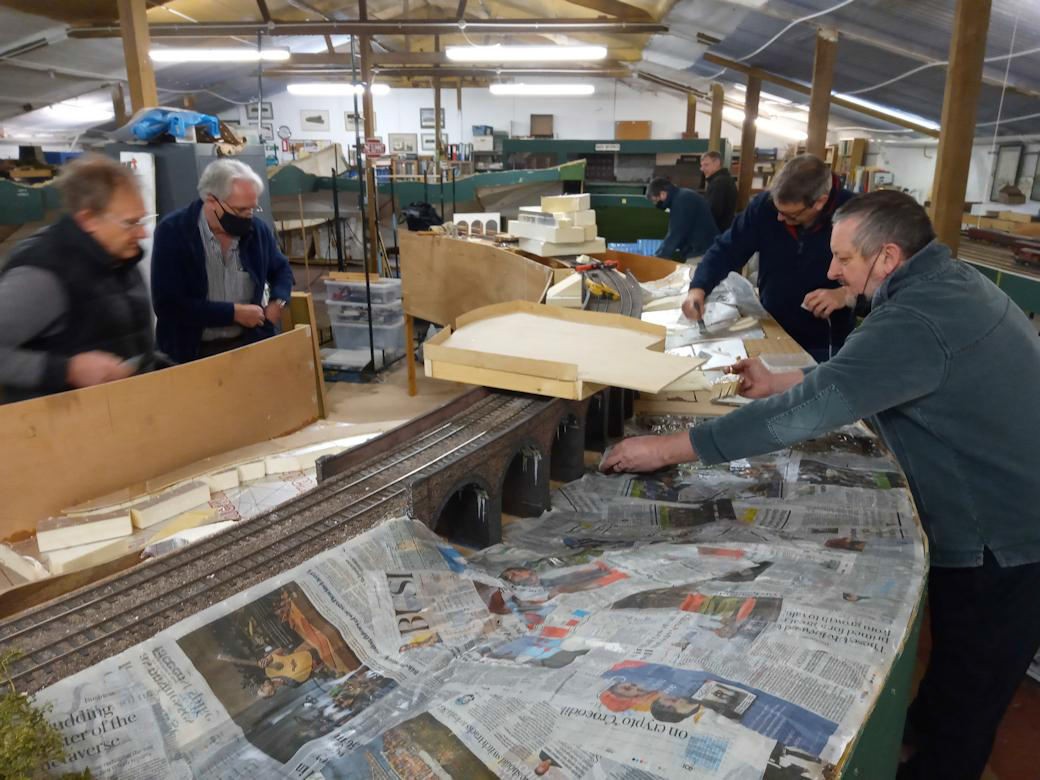
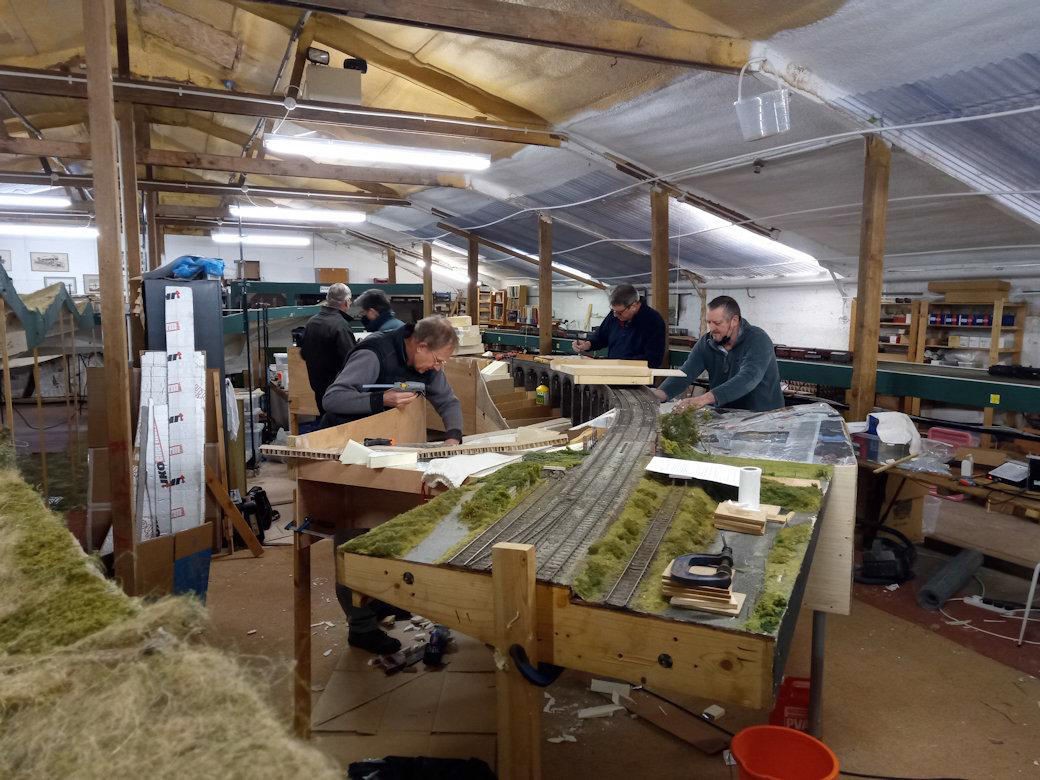
The scenic work on Prestleigh Viaduct has gone into overdrive, with only five weeks or so to the (three day) show. Good old fashioned papier-mache ,chicken wire and cardboard is coming to the fore and lots of old newspaper being gobbled up in the process. It’s a team effort with everyone mucking in. The Holly Junction gang will be majoring in grass and hedges, Allan on the farm module, Pete C on running repairs to existing scenery and miles of fencing, snd Rob G is doing the huge backscene boards. Ed, Dean, Christopher, Konrad and others will produce the vital scenic substructure, Steve a model of Normans’ Bridge which will mask the fiddle yard entry, Keith will look over the pointwork, and Dave S will make sure we have all the necessary DCC equipment lined up and ready. Given our scenic ambitions for Prestleigh Viaduct, we are unlikely to have time for a test run before the exhibition, but then we do have a whole day before the show to set up and get it all working again.
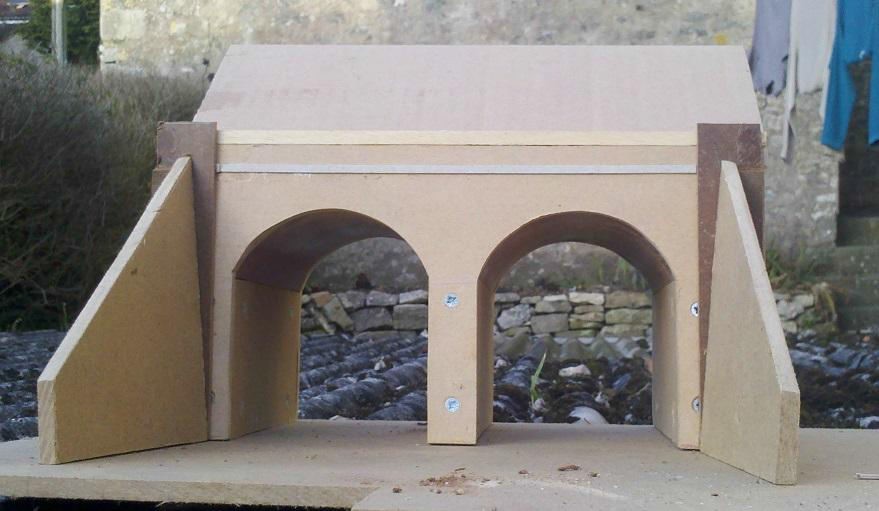
The exit to the fiddle yard will be the twin portal Normans’ Bridge a substantial structure some 60′ long, so on the way to being a tunnel. The first overbridge north (Whitstone Lane) was not typically S&D so the next one along was chosen, the left portal being added when the line was doubled. The Normans are the local farmers who still farm the land around the cutting that they filled in, and live nearby. Your editor likes to imagine that there continues to be an army of them (hence Normans’). Farmer Norman at the time the bridge was built insisted that a six foot high solid wooden fence should be built along the top of the bridge embankment to stop his cattle having ‘kittens’ at the sight of the trains, and the fence was there right to the end. The mostly MDF carcass that Steve has made is pictured above. Clearances on the S&D were quite tight, so a test was carried out to check that the tall chimneys on our 7F 2-8-0s will not get chopped off by this unforgiving structure.
Dave Haines has started making some trees, using twisted wire and sisal string to thicken it up, coated with PVA/Polyfilla mix and painted with acrylics – mostly burned umber, greys and green. They represent trees about 60 feet high:
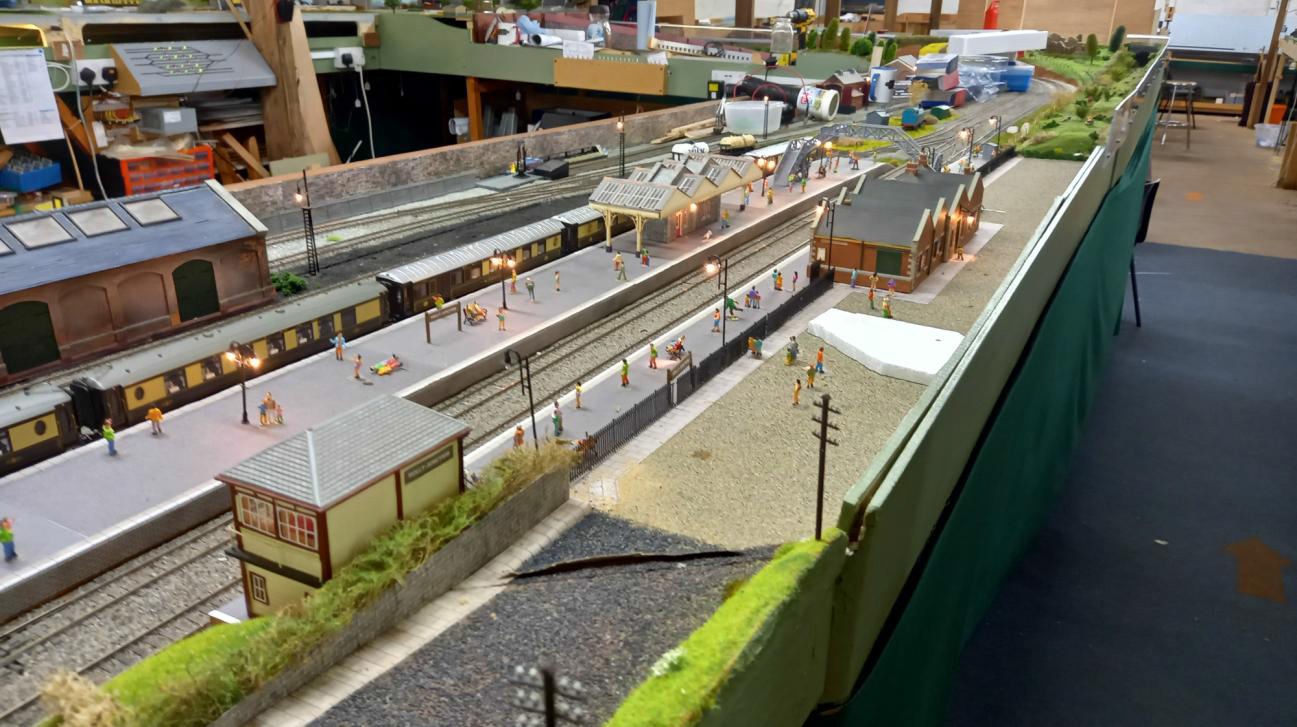
Next up some pictures of Holly Junction. Never let it be said that the Gang of Four ever waste any baseboard space – it is action everywhere, usually with lights on - great fun!
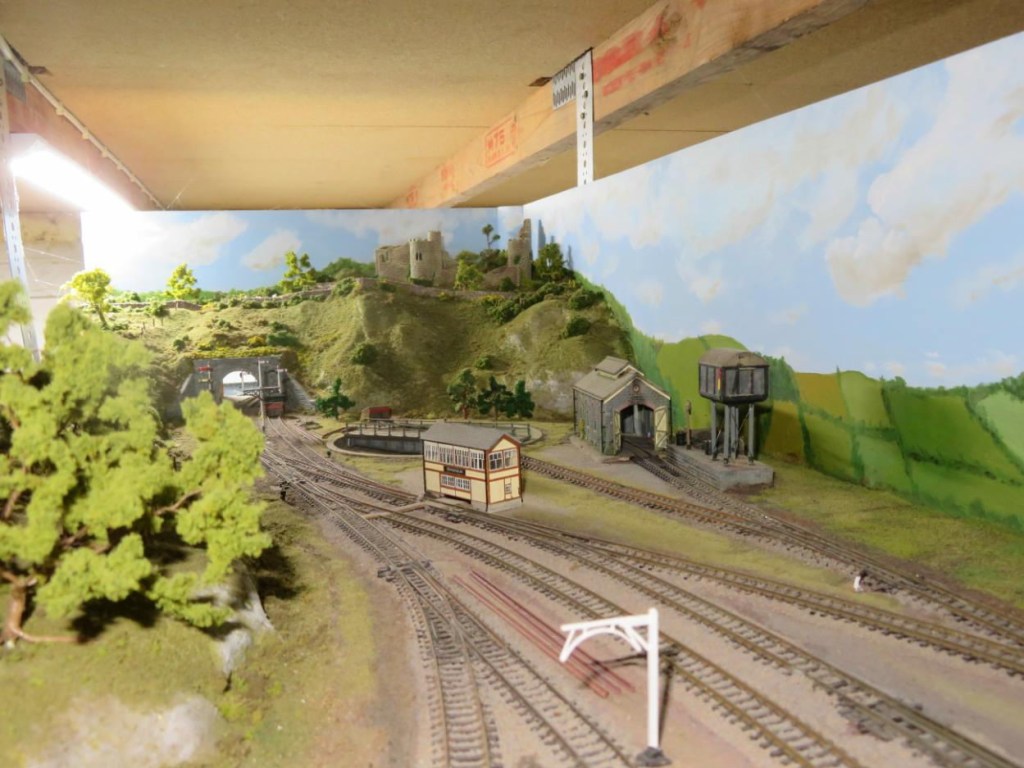
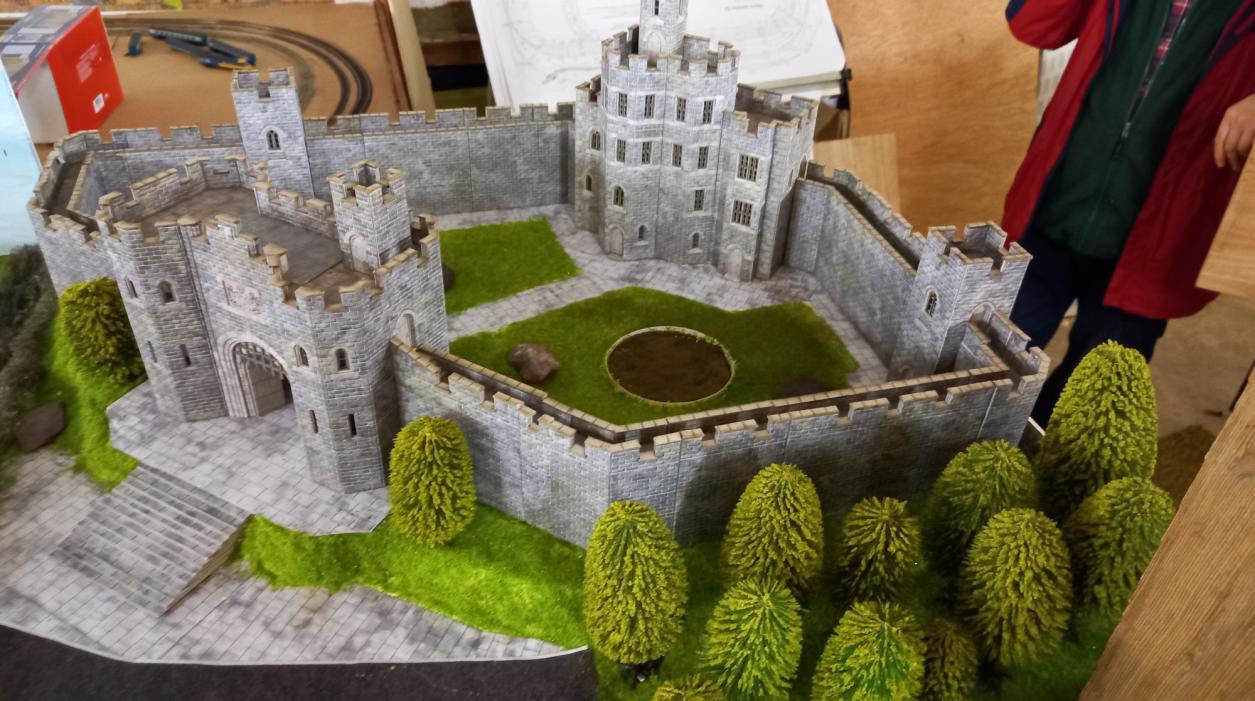
This castle is spectacular – all railway layouts should have one!
Jim’s 2mm finescale “working diorama” is due to appear at the Warley Show in late November as part of the belated Diamond Jubilee celebrations of the 2mm Scale Association – it was formed in 1960. They have their own event at the Derby Conference Centre in June, but Warley MRC offered them a “show within a show” by inviting some of the best 2mm layouts around. As Jim says “Somehow they even included mine!”
Although late November is a long way away, the full details are required by the organisers by late March, so Jim had to quickly put a lot of it together, including some idea of what is going to be in the second diorama, which shares the cassette fiddle yard with the original one. The photos below show what has been achieved so far.
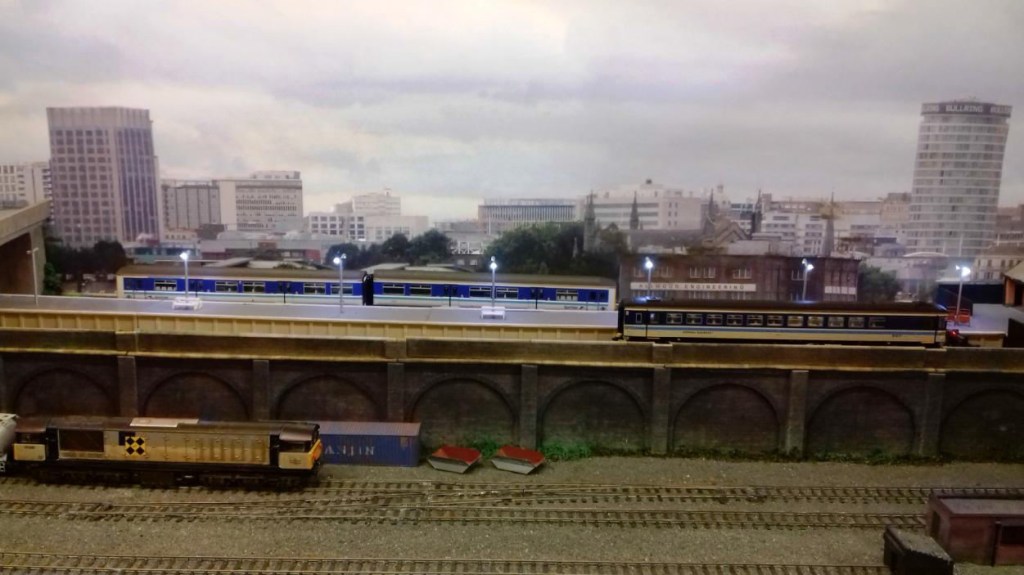
Above is the original diorama that appeared at “Railwells” in August 2019. For six years, Jim worked on the 13th floor of the tower block on the LH side!
The lower exit from the fiddle yard (just behind the 2mm FS logo) needs a visual blocker so Jim rummaged around in his drawers for a suitable building, and came across a Langley etched LNWR signal box, part built. Although it seemed unlikely a freight yard would have a fully fledged box, rather than just a shunt frame, it was ideal to fit between the first and second track. The photo below shows the pieces, including an etch of levers, along with a £1 coin for size comparison. The real anoraks will notice that the levers do not have the traditional LNWR hoop shaped catches!
Bringing up the rear are a couple of views of Steve’s completed model of a LSWR Type 1 signal platform mounted box in its full pre-grouping glory with frame exposed and valancing.
And the 3D model of the Stevens frame to go in it.