‘John’ has a 7mm O gauge model of the Lickey Banker ‘Big Bertha’ (BB). He used to own a country house hotel and had an O gauge layout of the Lickey Incline in the loft. YMRG visited there many years ago. John has now moved to near Somerton and has another Lickey Incline layout. Now a Lickey Incline layout needs a Big Bertha and, as already said, John has one. It worked when he first had it when his wife had bought it for him. The loco was made by a Roy Harris, a model maker in Bristol. It had started to run erratically and went back to RH to be fixed. It was there for some time, but the ‘repairs’ made were unsuccessful and John and his wife rescued Bertha and took it home where it languished.
Dave S (of hammer fame) first met BB at Kettering where David S was picking it up after someone had had a look at it and declined the restoration. John M had also had a look at BB and concluded that it had been an exquisite model, fully compensated but now was in a terrible state. He felt he didn’t have time to do it the justice it deserved. Enter Dave (S) at the same exhibition. He said that if nobody had taken on the repair he would have a look next year
(2026). Well it’s 2026 and Bertha still needed fixing. After getting David S’s Adams Radial to run smoothly, Dave was sent a box of bits containing BB. So what did he receive? Some pictures may help.
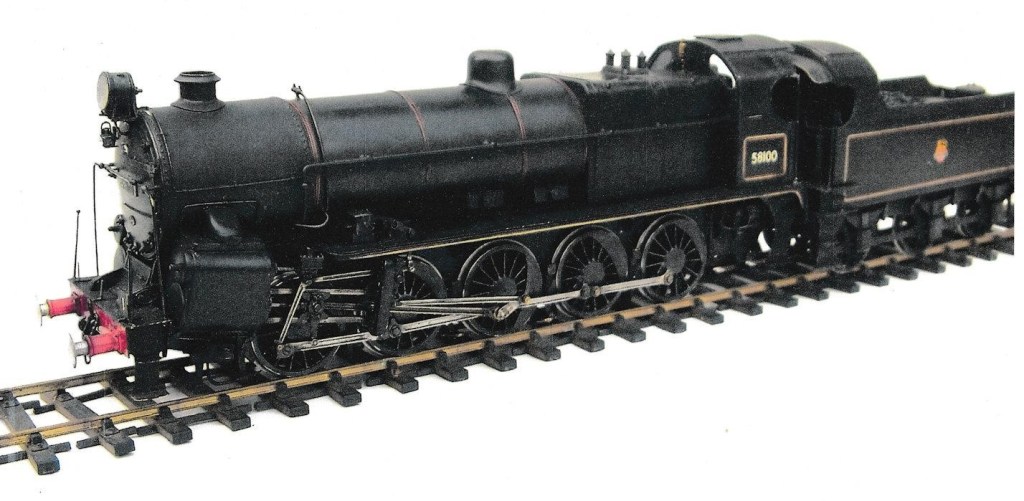
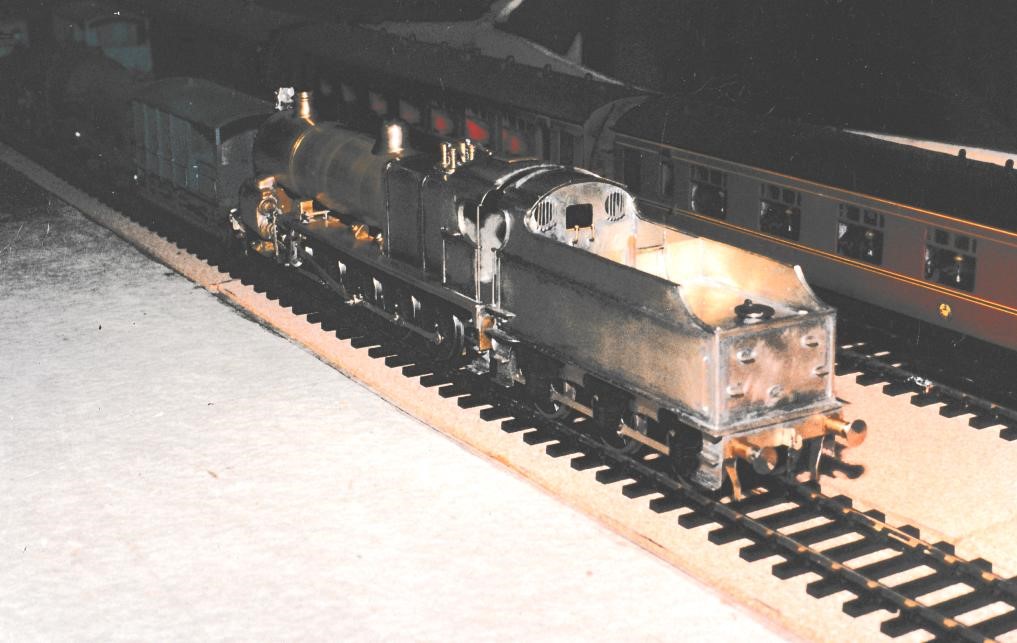
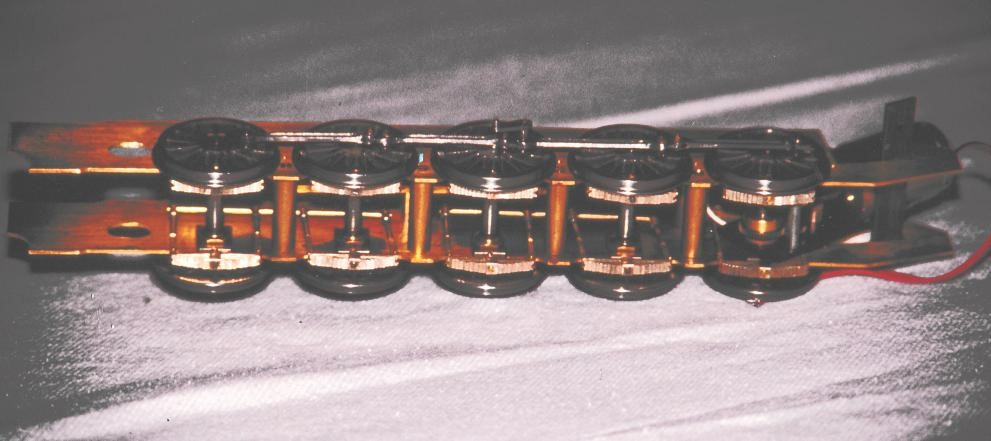
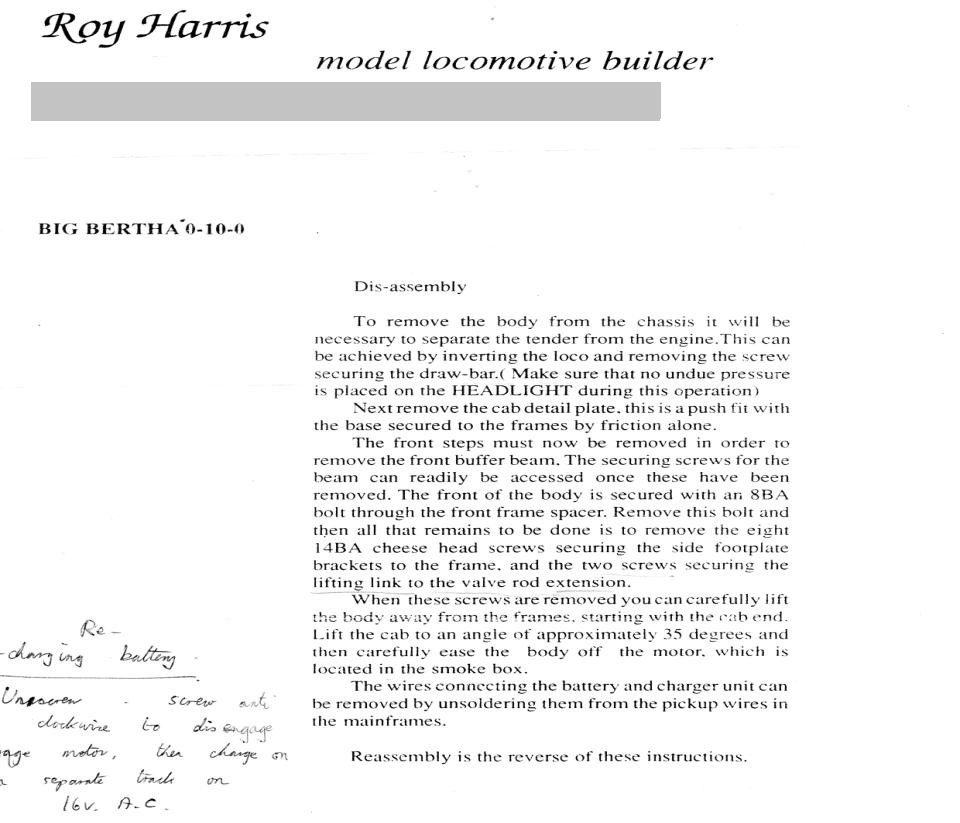
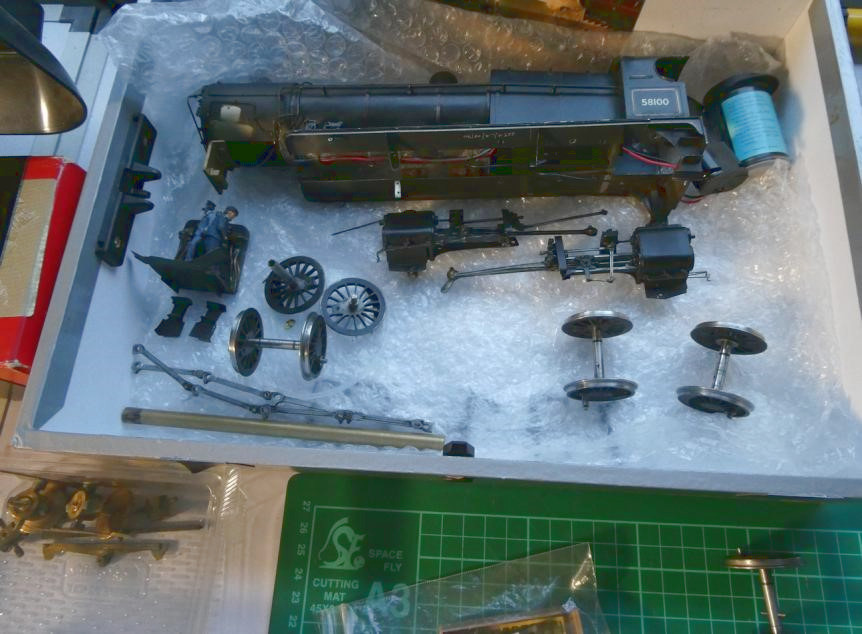
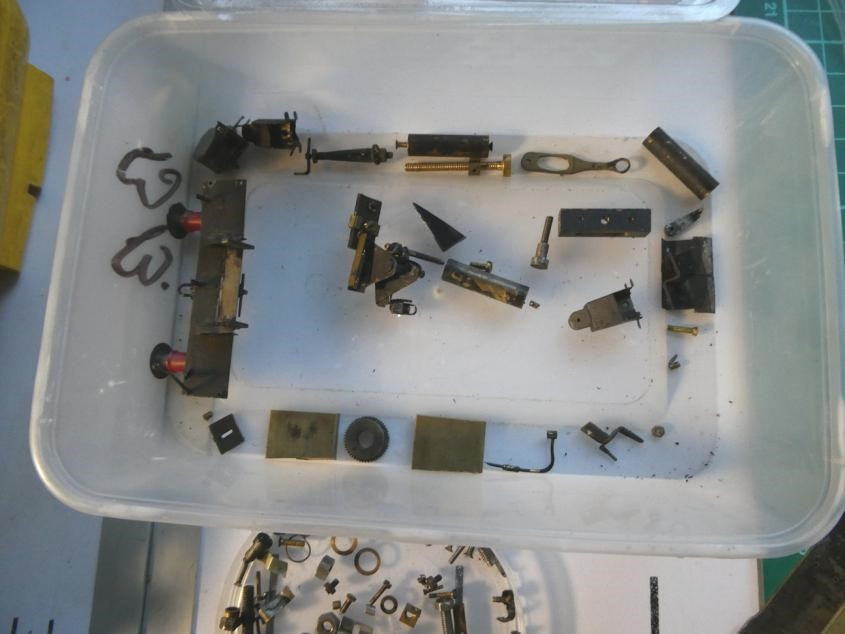
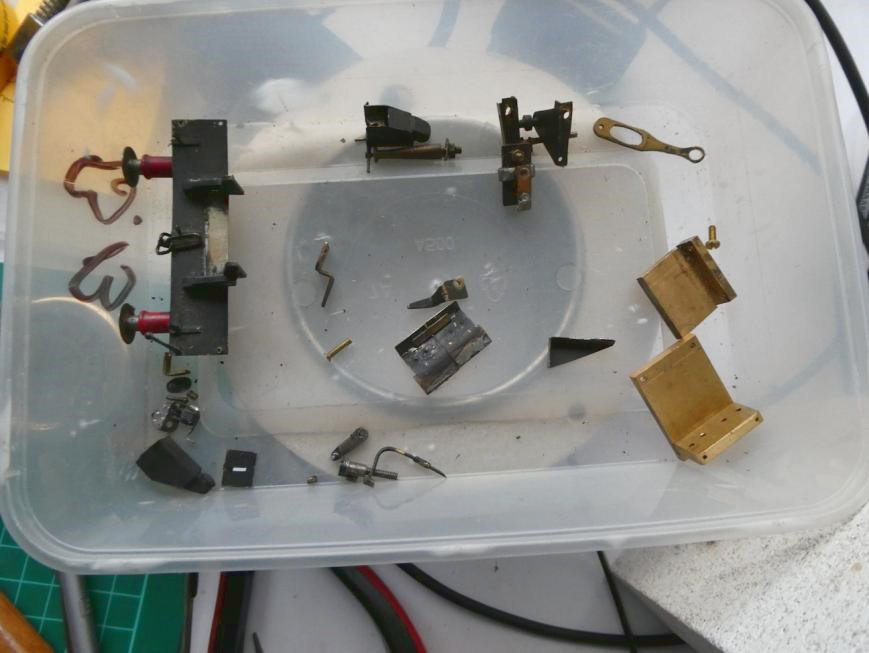
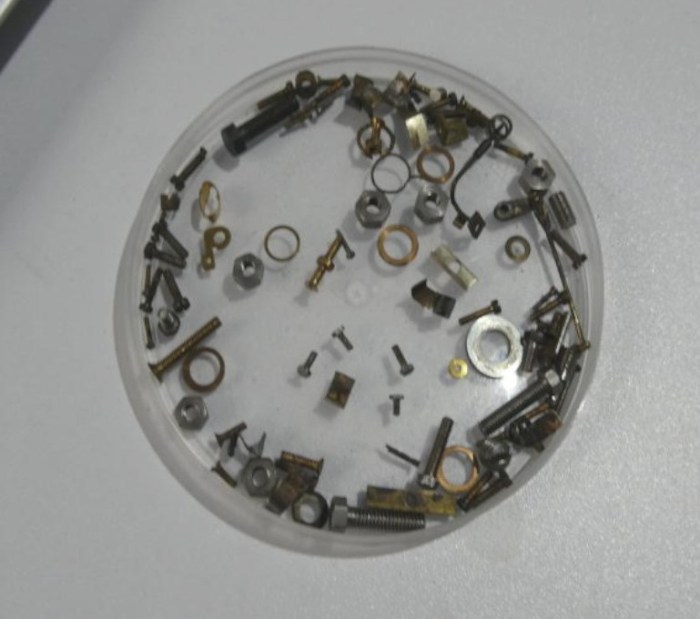
Dave started with the tender, as Bob Alderman advised some years ago. The tender is fine and needs nothing doing to it – that was easy.
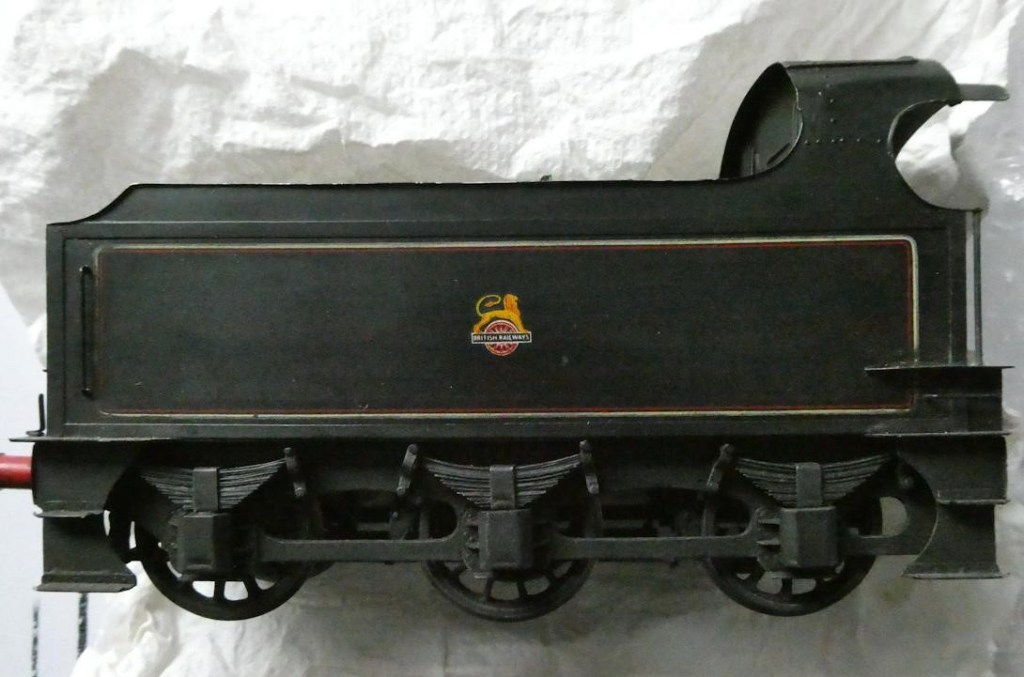
Now for the chassis and Dave forgot to take some pictures of it was received. Needless to say, it did not look like Picture 3. The springs had been cut from their compensation beams and soldered directly to the chassis sides. Picture 10 shows how the bits went.
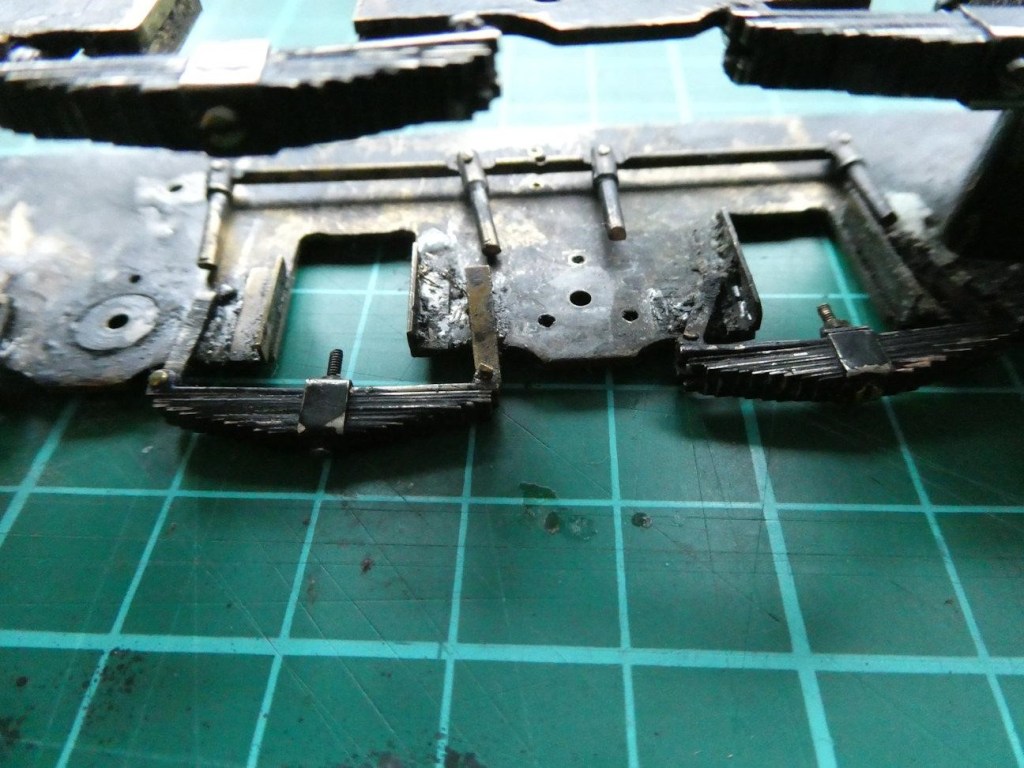
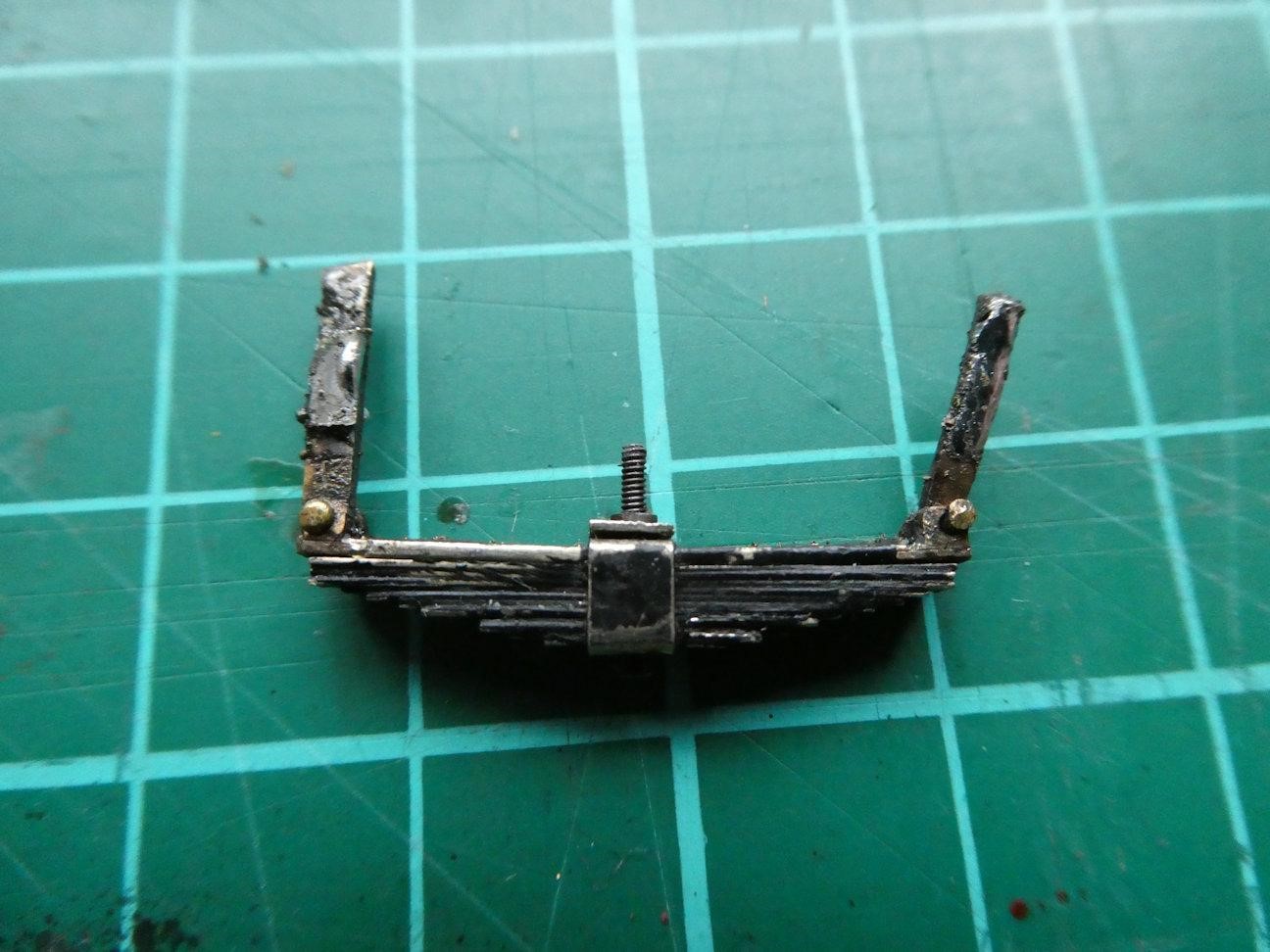
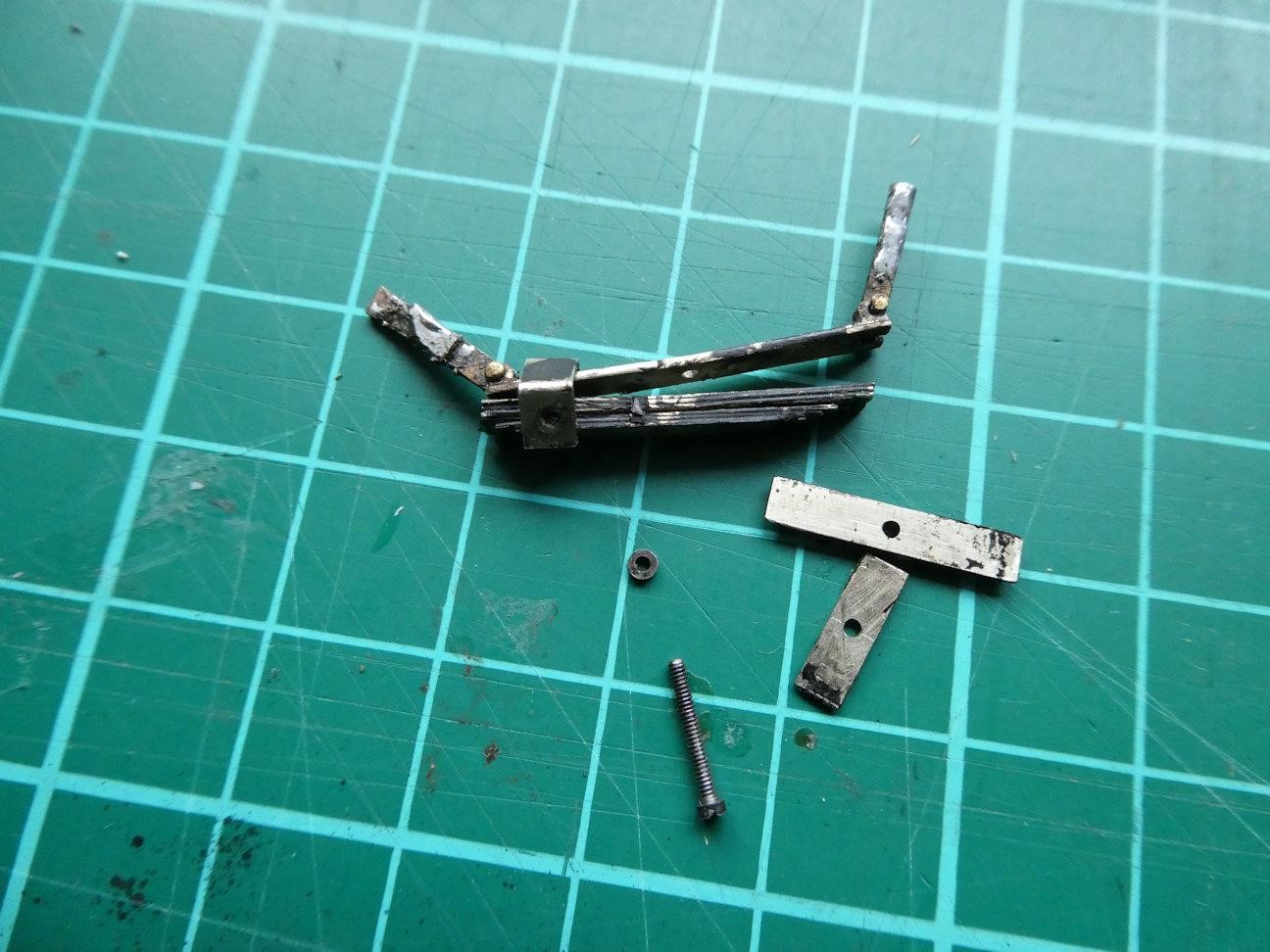
11.&12. The Springs
Pictures l1 and 12 show an individual spring with its hinged ends and the fact that each spring is made up of individual leaves.
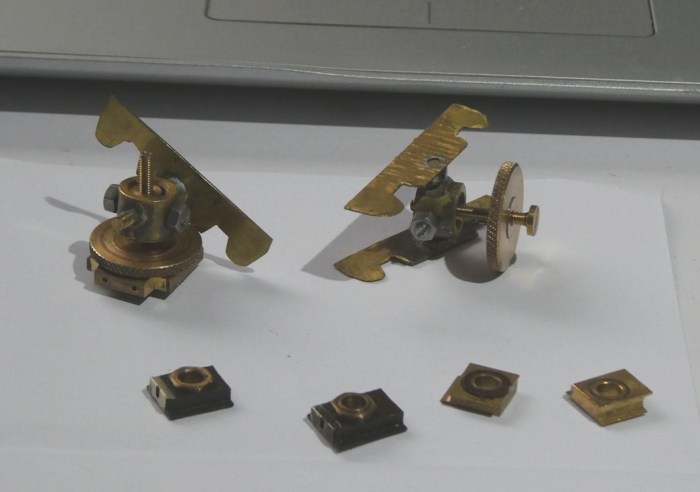
Picture 13 shows the replacement compensation “thingies” – with bits missing. These were mounted between the chassis sides. Dave suspect that they enabled the ride height to be adjusted. What a change from the original method. Two types of horn block are also shown.
At this point a decision has to be made. What to do with what Dave had. He can’t easily put it back to original as some of the bits are missing – both types of compensation. So what to do?
 Yeovil Model Railway Group (YMRG)