Jim has concluded that CS2 is not the best place to try and make something of the ‘Aberdeen White Elephant’, otherwise known as the ginormous 2mm finescale fiddle yard that I carted down from its namesake in north east Scotland (ie Aberdeen!) in the summer of 2019 and done little with since, due to (a) Covid and (b) his house move to Exeter in 2022.
Despite the loft in his bungalow having insufficient headroom to stand up in, and the loft hatch being unable to accommodate 8ft long baseboards, he has decided that he can make a better fist of it there than he first thought, and it will remove the need for regular 100 mile return trips back to Somerset.
Accordingly, he ‘bit the bullet’ a few weeks ago and carefully cut a few millimetres out of all the rails (36 at every baseboard joint with 18 parallel storage roads) followed by gently sawing through the MDF baseboard top to convert three baseboards 8ft long into six baseboards 4ft long. All six boards are now up the loft at home and, simultaneously, I am adding raised flooring to gain access right down the length of one leg of the roof space. Below is a picture showing four of the boards, with two more to be added at the far end, before a corner is added:
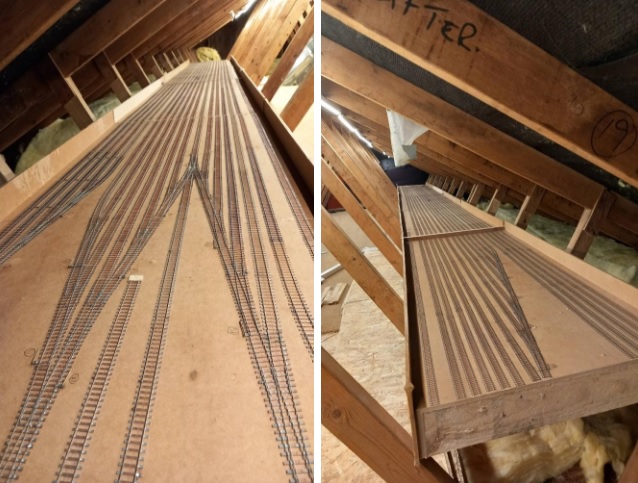
The second picture is taken from the other end and shows the fifth “half-board” added and more of the new flooring to the left. Of note is the relatively little vertical leeway Jim has to insert cross struts to support the boards more positively.
In May, the 2mm Scale Association is having its usual show at the Derby Conference Centre and this year it is all weekend, rather than just Saturday, and the star of the show will be Dunallander, which this fiddle yard was originally built for. Included in the van from Aberdeen this time will be the Perspex sheets that cover the fiddle yard boards which Jim forgot to collect in 2019!
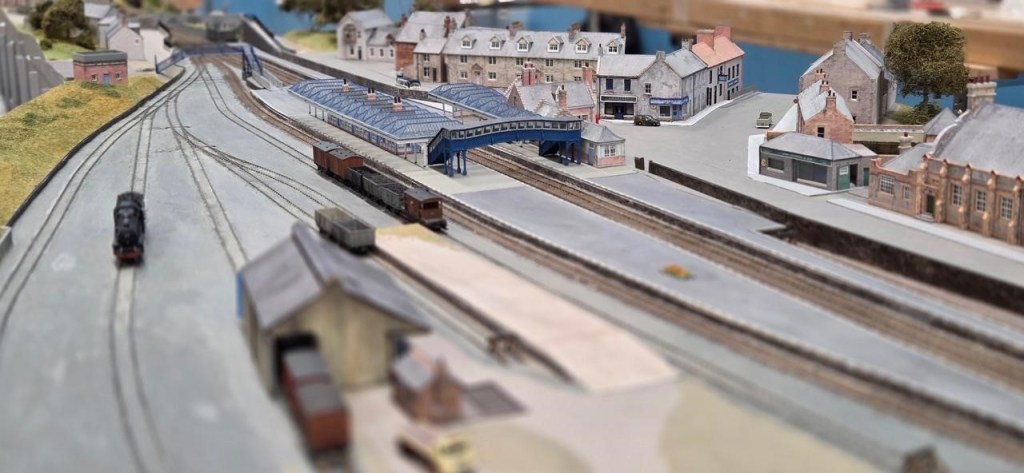
A reminder that the scenic side of the layout has yet to be started but, in comparison, will be very simple and comprise a double track main line, with overhead 25kv catenary (!) and mineral exchange sidings and a branch leading to Littleton Colliery, near Cannock in Staffordshire. In contrast, the Grampian Area Group of the 2mm Scale Association, who was persuaded to save the scenic side of the original layout, have strived to construct an almost exact copy of Dunblane Station and its immediate environs, involving many, many buildings – see photo above at the Elgin Show. In contrast Jim’s rendition of Bungham Lane, Penkridge only needs one building, the junction signal box!
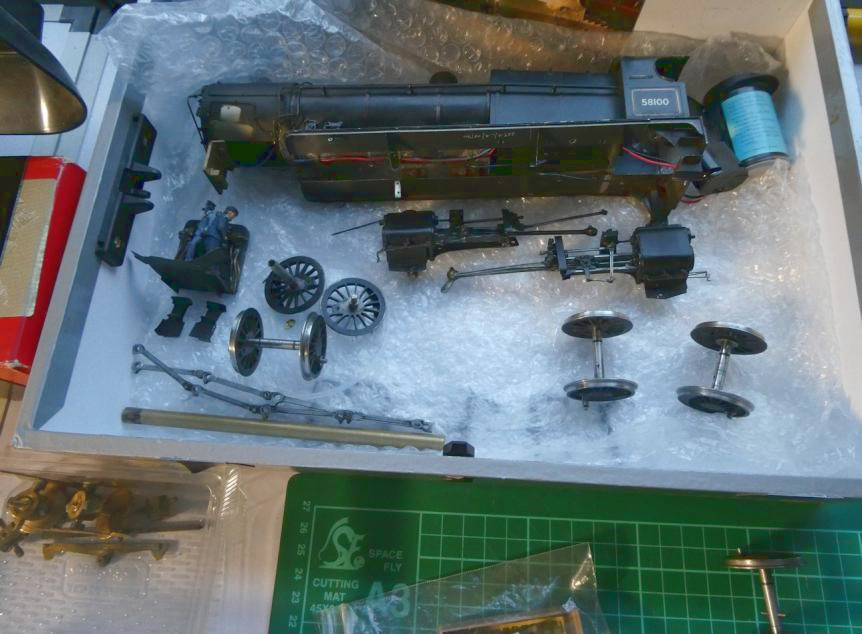
February saw Part 1 of the Big Bertha Repair ending on a cliff hanger see the link below:
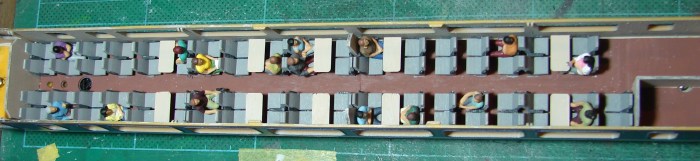
Next up Steve’s Lima Class 156 Upgrade incorporating his own and Hurst Models resin 3D printed parts:
Steve is modelling Verwood in EM Gauge, and needed a Stevens style lever frame for the box plus a Stevens style Knee frame for the ground frame that was at the West Moors end of the loop. He’s 3D modelled these in QCAD and OpenSCAD and is 3D printing them in 4mm and 7mm scale on his AnyCubic Photon Mono 4K in AnyCubic ABS-Like Water Washable Resin 3.0. Both can be configured to have LSWR or SR style plates and with any number of levers. Could the models be 3D printed though?
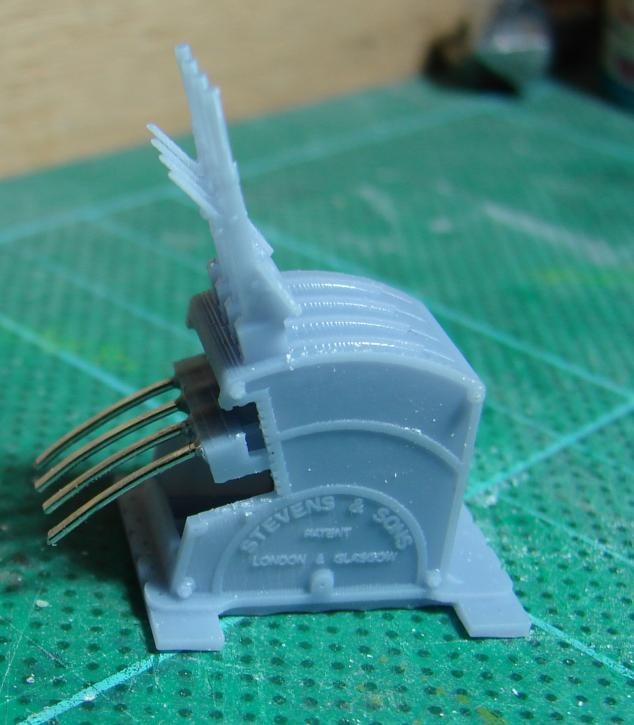
This is a 7mm scale version of Steve’s 3D printed LSWR style ground frame for Verwood with some overly thick tails fitted to the locking frame. The clearness of the text suggests to Steve that his BR(S) smokebox plates (with curly 6s and 9s) could probably be printed vertically rather than on the bed allowing me to batch them up on a raft and remove and prepare them as required.
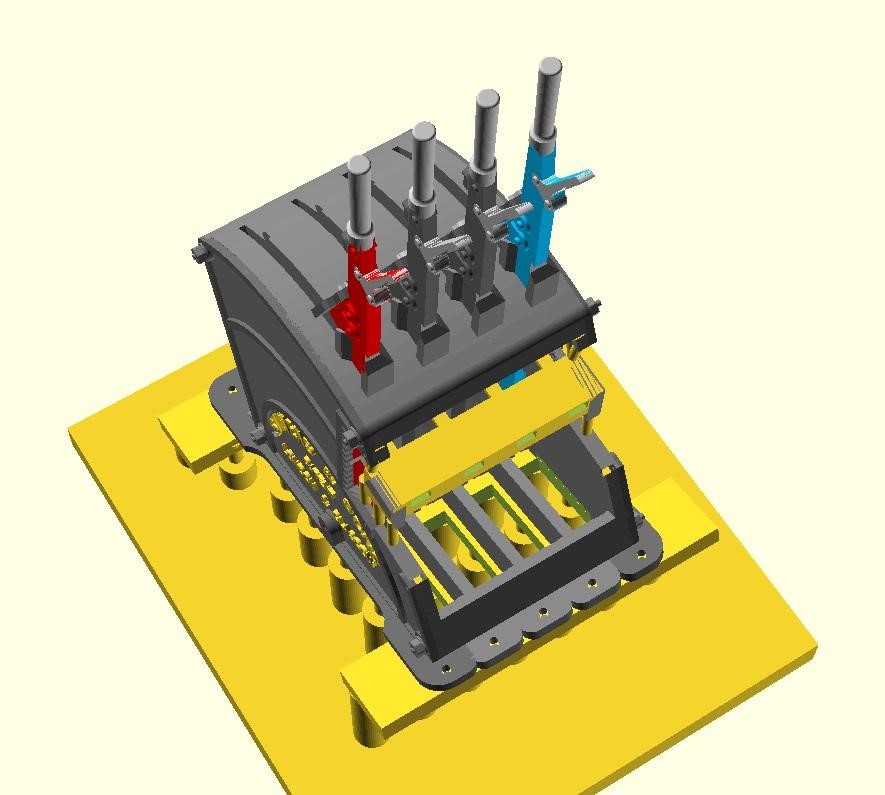
A test print showed that when tilted up on supports for 3D printing, the void under the tails needed to be more realisticly modelled (almost empty bar framing) so that it could drain of resin and water during washing. Win-win!
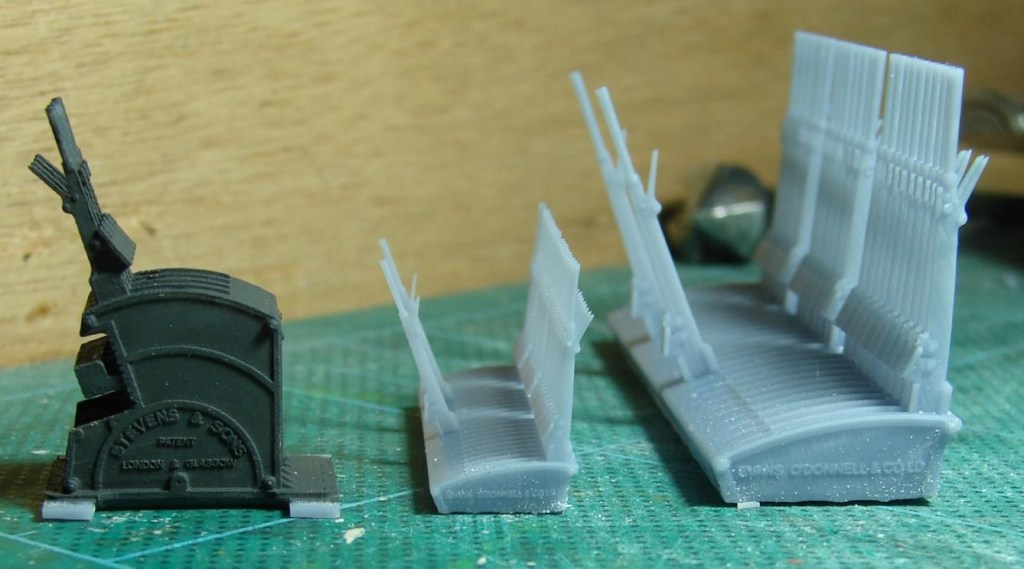
On the left a reject ground frame with coat of Humbrol Dark Grey to bring it to life. Also ‘Privett’ LSWR era frames in 4mm and 7mm scale with just the FPL levers reversed, as these frames were for most of the day waiting for something to happen. These sort of frames were not untypical of the Meon Valley and other somewhat overbuilt lines of the same period.
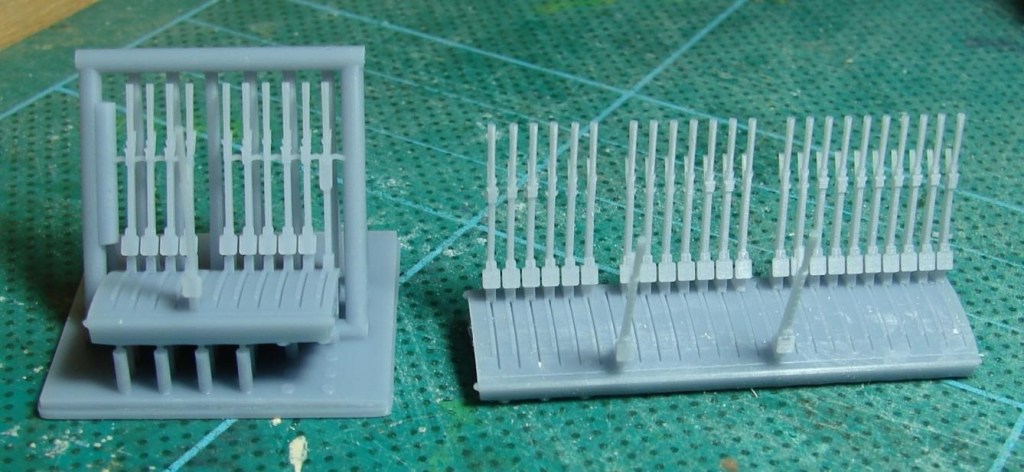
On the left a lever frame for Verwood in the final version of the support cradle. As with the ‘Privett’ frame on the right, what should have been the only FPL is pulled awaiting the next train – that was a mistake as it should have been Lever 4! The Privett frame was fairly easy to release from the final version of the support cradle with nicely aligned levers. It looks like some of the supports for the Verwood frame went AWOL but recovered just in time! There were a lot of iterations of the support cradle before it worked reliably every time.
 Yeovil Model Railway Group (YMRG)