This month some very small models book end some very big models.
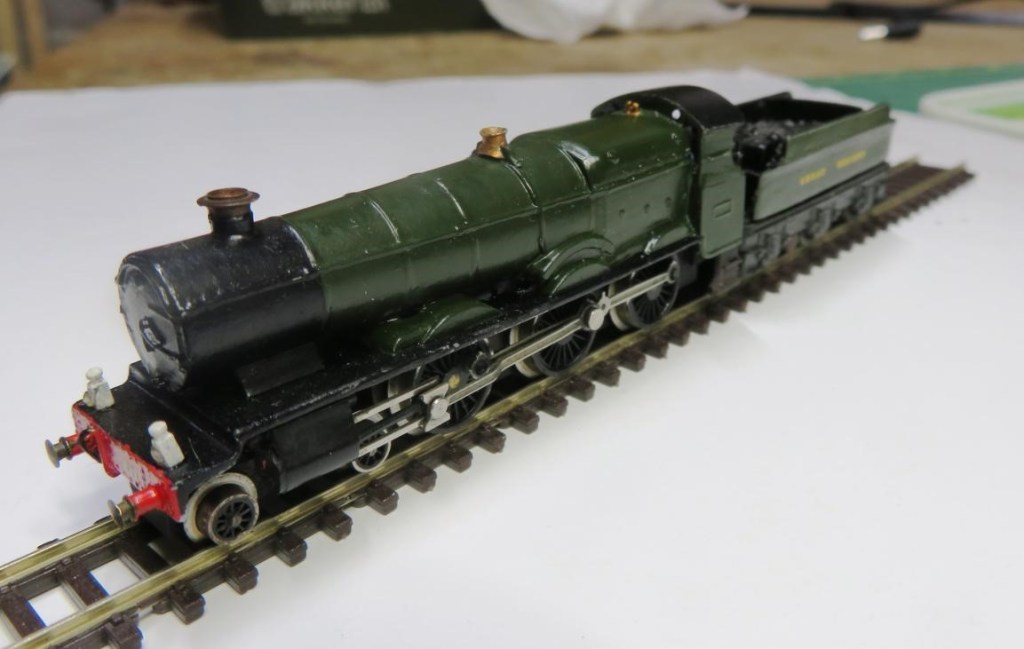
This is Dean’s 2mm scale N Gauge Saint Class 2929 St Stephen. This is a Grafar Hall cut and shut with a Langley Saint conversion kit. He still needs to source name plates and cab side numbers. The kit went together quite well but the cab needed a scratch built brass front plate, all white metal joints were low melt soldered without any blow outs, so that was a new experience and a technique he feels he’s got to grips with.

Dave H finished another Shelf Queen while he had Covid – it’s a Slaters kit with some scratch built bits so as to match the rest of the Queens when they are finished. He thought he’d try a kit to save time (and frankly 8 compartment thirds are a bit boring to build), and having the sides ready made did save time, but I think it was harder to paint.

The kit is accurate though and builds a good likeness of the real thing. This is the spoofed “Swindon official photo” which he think matches photos from the time quite well.
The transfers are Tony Reynalds (still available from CPL) and they are streets ahead of anyone else’s for Edwardian coaches. They are waterslide but very easy to apply. This model was started in 2007 then abandoned after I messed up the initial paint job, but then John M suggested dropping it in hot caustic soda to strip the paint off. That worked (lots of bits fell off in the process), and Dave decided to have another go. Main lesson – carve off the top and middle door hinges before spraying the chocolate and cream. They just get in the way and they are completely invisible once painted.
This is the first of five clerestories which will form a fast non-corridor train, topped and tailed by two 40 ft PBVs I’ve already built. The next on the shelf is a 58ft clerestory tricomposite which Dave started building in 2000, making it the longest serving ‘Shelf Queen’ by three years. It just needs lining, lettering, glazing and varnish so maybe it won’t take too long!
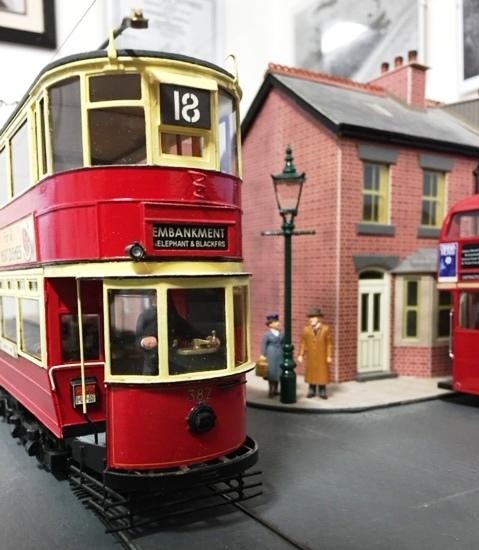
Simon K has a ‘small’ 7mm scale 0 Gauge tram layout. Your editor is going to take a wild punt and suggest that it’s a ‘London tram’. Simon comments that ‘The Brief Encounter’ couple look a bit out of focus. As someone who worked for years at Elephant & Castle, Jim couldn’t help chuckle at the destination blind. And no, your editor couldn’t understand why either.
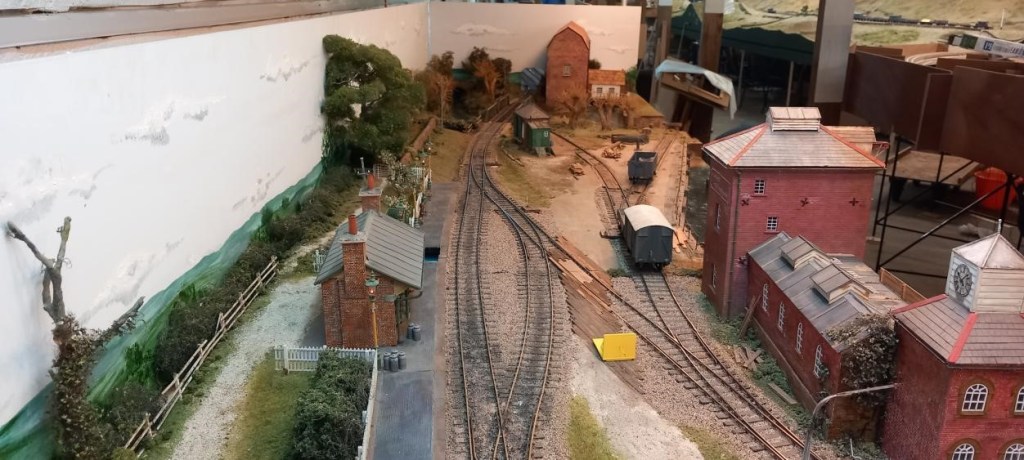
An overall view St Martin’s Wharf looking towards the fiddle yard. This masterpiece was Bob Alderman’s penultimate layout. Inevitably, extended storage had taken its toll so members have been cleaning and fettling it, and also working out how it works. Pete C has found the missing platform bits, and the platform filler is now repaired. The explanatory Colonel Stephens display page has been reworked, the contact details having changed, and it will be laminated.
Dave H is fitting DCC chips to the locos and giving them a service so that they can be reliably controlled by the Z21 and Hudl portable tablets. He has also organised the operating rota for Taunton so that operators can benefit from free admission and, even more importantly, free school dinners!
Jim has been creating some “Whale” bogie ballast hoppers in 2mm finescale. In real life these were a development by BR in 1966/7 of the more common 40 tonne “Walrus” and “Seacow/Sealion” hoppers with extended bodies (eight panels instead of six). They were not a huge success, and were transferred from the Southern Region to the Midlands in the 1980s, making them ideal for my (maybe one day!) 25KV overhead project “Bungham Lane”.
Inspired by an article by Tony Buckton in the May 2010 issue of “British Railway Modelling”, the main difference is Tony carefully “cut and shut” two Farish RTR products. These now cost over £50 a piece new (!!) so I am butchering N gauge Society etched brass Seacow kits which otherwise were mouldering away in the gloat box. No longer available, they require considerable dexterity with a soldering iron, but Jim has loads to make mistakes with!
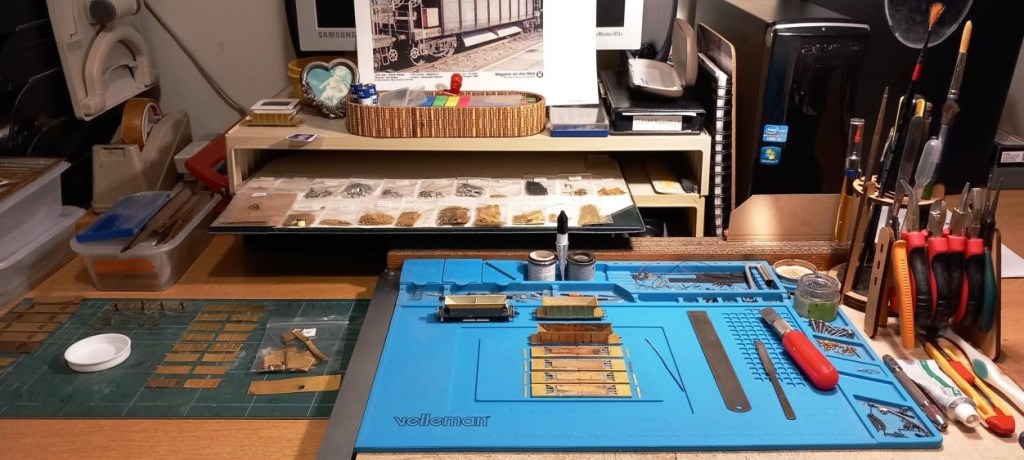
Seen above one basic bodyshell sitting on the temporary workbench that Jim uses in his study. For comparison above it are (a) a Farish RTR Seacow and (b) a NGS Seacow body. Also in the picture is a photo of the real thing from Gareth Bayer’s excellent website “Wagons on the Web”.

Five basic bodyshells completed – which is as far as Jim has got at the moment!
 Yeovil Model Railway Group (YMRG)